
GUIDE TO HALAL FOOD IN LISBON
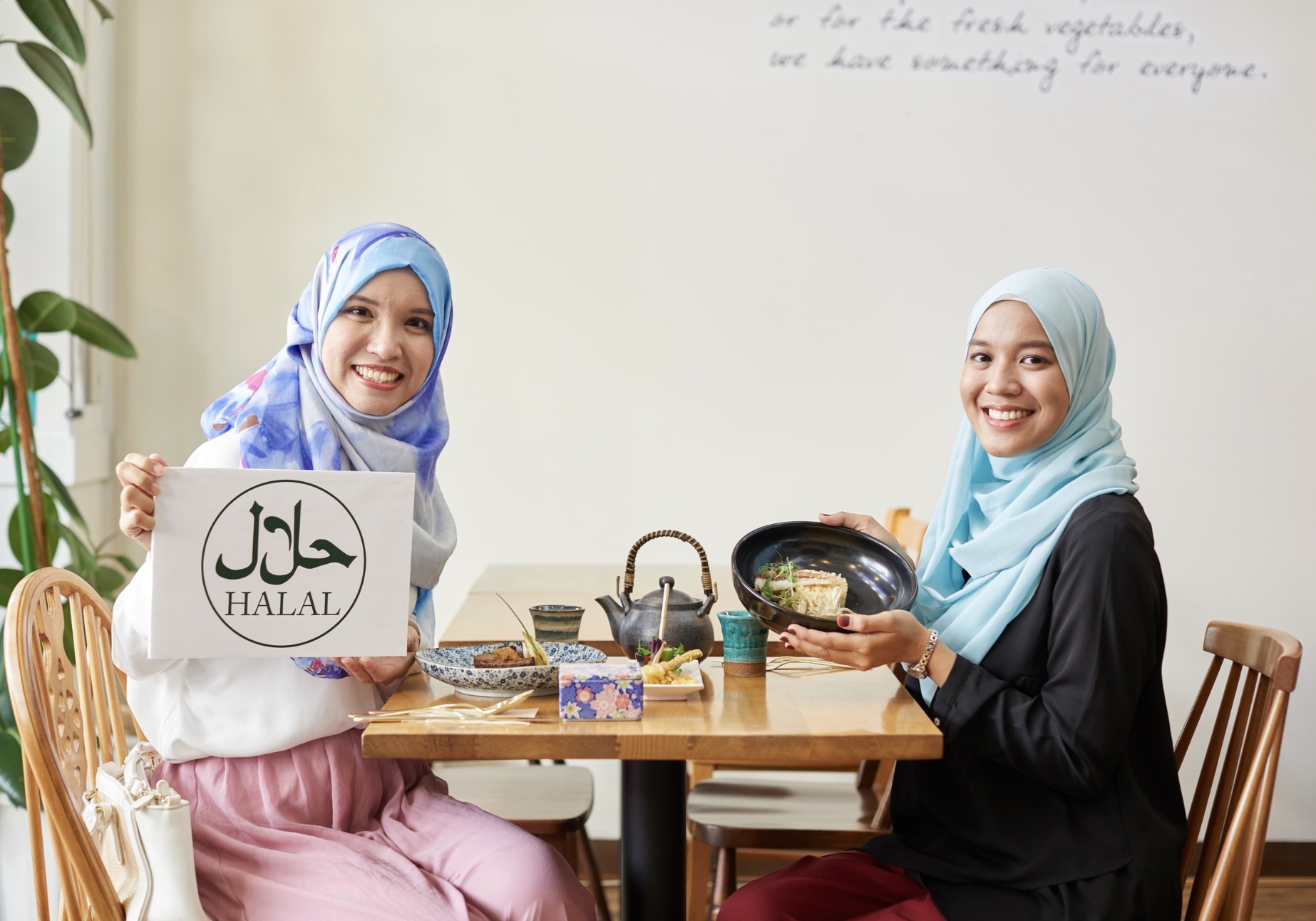
Finding halal food in Lisbon is relatively straightforward when you know where to look. The city has halal restaurants, butcher shops and grocery stores, particularly around Mouraria, Martim Moniz, Anjos and Arroios, as well as in more residential areas such as Odivelas. Most specialize in South Asian, Middle Eastern or North African cooking. Finding halal versions of traditional Portuguese meat dishes, however, is considerably more difficult.
That does not mean Muslim travelers have to choose between eating at halal restaurants and missing Portuguese food altogether. Lisbon’s cuisine is rich in grilled fish and seafood, and even vegetarian and vegan restaurants, or at least veggie dish options in more traditional restaurants, are increasingly common. However, while in Portugal, it’s safer not to assume that options such as these, that may look halal from the outside, are indeed suitable for halal diners. It’s not uncommon to, for example, use wine to create sauces for some typical Portuguese dishes, and alcohol can also be used for marinades and stews. Pork and pork-derived products may also be hiding in things such as stews, rice dishes and even desserts, and even something that may appear to be meat-free may have been cooked with lard, sausages or meat stock.
Halal is also not widely used as a formal category in traditional Portuguese restaurants. Staff may understand the word, particularly in central areas more used to tourists, but some may interpret it simply as “no pork”. It can be a little confusing as a restaurant serving halal meat may still offer alcohol or prepare non-halal meat in the same kitchen and, meanwhile, a fish, vegan or pork-free dish may be potentially suitable without necessarily being halal-certified. We will look in more detail into places that are indeed reported as halal establishments in Lisbon, as well as others which possibly offer alternatives after the right questions have been asked to the staff.
Islam has been part of Lisbon’s history for centuries, though not in a continuous way. The city was under Muslim rule during the Middle Ages before becoming predominantly Catholic after the Christian conquest. Curiously, as we will explore further below, Mouraria, the neighborhood historically associated with Lisbon’s Muslim population, is once again one of the best places to find halal restaurants, butcher shops and grocery stores today.
This guide explains what halal means, where to find halal food and meat in Lisbon, and how to navigate Portuguese establishments when certification is not displayed.
What does halal mean?
The Arabic word halal means lawful or permitted under Islamic law. It is the opposite of haram, which means forbidden. Although the term is most commonly encountered on restaurant menus, butcher shops and food packaging, it applies to many other areas of life. In finance, for example, halal principles prohibit interest, excessive uncertainty and investments connected with activities such as gambling or alcohol. In business, they call for honest contracts, fair dealing and lawful goods and services, while clothing and personal conduct may be assessed according to rules concerning modesty and behaviour. In this guide, however, we are focusing specifically on what Muslims are permitted to eat and drink.
Halal food is not a particular cuisine. It does not necessarily mean Arab, Turkish, Pakistani or Moroccan food, even though restaurants serving those cuisines are often where travelers encounter the word. A Portuguese dish can be halal when its ingredients and preparation comply with Islamic dietary rules, even if they weren’t trying to do so on purpose, while a Middle Eastern dish made with non-halal meat would not be. Halal describes how food is sourced, prepared and handled, rather than where the recipe comes from.
The basic dietary rules come from the Quran, Islam’s sacred text, as well as from the Sunnah, meaning the teachings and practices of the Prophet Muhammad. Accounts describing what he said and did are known as hadith, and these help Muslim scholars interpret how Islamic principles apply in everyday life. Muslim jurists subsequently interpreted and applied these sources to new situations, gradually developing the body of Islamic jurisprudence known as fiqh. This allows rules rooted in the teachings of the Prophet Muhammad, who lived from around 570 to 632 CE, to address modern questions involving industrial slaughterhouses, emulsifiers, flavorings, production lines and ingredients that might not even have existed.
For observant Muslims, eating halal is not a preference as such, but a religious commitment. The Quran instructs believers to eat what is both lawful and tayyib, a term generally understood as good, pure or wholesome. Following these rules makes an ordinary daily act part of religious practice and choosing food, while being conscious of how something reached the plate, is one of the ways a person expresses obedience to God.
At its most basic, Islamic dietary law prohibits pork and its derivatives, blood, animals that have died before being properly slaughtered, meat dedicated to anyone other than Allah (God), and alcoholic drinks. The restrictions therefore reach beyond pork as meat, also including lard, gelatin, pork-based stock, animal enzymes and flavorings derived from prohibited sources. Most unprocessed fruits, vegetables, grains, legumes and nuts are naturally halal. The complications usually begin with meat, alcohol, animal derivatives and heavily processed products.
Under widely recognized halal guidelines, animals slaughtered for food must belong to a permitted species and must not have died from illness, injury or pre-slaughter stunning before the prescribed cut is made. Some halal authorities accept stunning that leaves the animal temporarily unconscious, provided it is reversible and the animal is still alive at the time of slaughter. The person carrying out the slaughter invokes the name of Allah, commonly by saying Bismillah, meaning “in the name of God”. A sharp blade is used to cut the throat, including the principal blood vessels, and the blood is allowed to drain, and the consumption of blood itself is prohibited. This process is often known as dhabihah or zabiha, although terminology tends to vary between languages and communities. In everyday conversation, people may use “halal meat” to cover both the species of animal and the method by which it was slaughtered.
But halal does not stop at the slaughterhouse, as ingredients, processing, storage, transport and preparation must also protect the food from prohibited substances. A halal piece of chicken may cease to meet a diner’s requirements if it is cooked in pork fat, marinated in wine or placed in direct contact with non-halal meat. International guidelines allow halal and non-halal food to be produced on the same premises, but only when effective separation and cleaning procedures prevent contact between them.
This is also why vegetarian, vegan and pork-free are not synonyms for halal. For example, a vegan stew may contain wine, a cheese one would assume to be vegetarian may use enzymes of an uncertain origin or, more evidently, a vegetable soup may have been made with meat stock, while sweets can contain porcine gelatin. Some foods may be suitable once their ingredients and preparation have been checked, but the absence of visible meat should not be assumed to provide the full answer halal diners need before proceeding with their meal.
Modern halal certification developed to give consumers greater confidence in increasingly long and complicated food-production chains. For this, a certification body needs to examine meat suppliers, ingredient lists, additives, production methods, storage, cleaning procedures and possible cross-contamination before allowing its mark to appear on a product or establishment. There is, however, no single worldwide organization making every halal decision and different Islamic legal schools and certification bodies do not always reach identical conclusions. Differences may concern seafood, stunning before slaughter, mechanical slaughter, how equipment must be cleaned, and even animal-derived additives. The Codex Alimentarius guidelines on halal food explicitly recognize that interpretations can vary between Islamic schools of thought and national religious authorities.
For travelers, this means that one person may be comfortable eating fish in a restaurant that also serves pork, while another will avoid any shared kitchen. Some Muslims accept meat certified by a particular organization but not by another. Others eat vegetarian food when halal meat is unavailable, subject to checking alcohol and animal-derived ingredients. Personal observance varies, just as it does within any large religious community, and research among Muslims also shows that people do not all assign the same importance to following halal dietary rules.
Halal nevertheless has a significance that extends beyond individual ingredients. Shared dietary rules help families and communities eat together with trust, and the butcher, restaurant or certification mark can become particularly important when Muslims live or travel somewhere where halal is not the default. From an anthropological point of view, food is doing what it so often does, that is, reinforcing belonging within a certain community and, in this case, even expressing faith.
Non-Muslims are perfectly free to eat halal food too. It is not food reserved exclusively for Muslims, nor does ordering it imply participation in a religious ritual. The rules define what Muslims may consume but they do not prevent anyone else from enjoying the same meal.
Islamic law also recognizes genuine necessity. The Quran provides an exception for someone compelled to consume prohibited food when no suitable alternative is available, provided the person does not deliberately seek it or consume more than necessary. This is generally understood as protection in serious circumstances, rather than permission to overlook the rules simply because checking the menu is inconvenient while on vacation.
Halal food and Portugal: a quick historical overview
While Halal is not part of the vocabulary of the average traditional Portuguese restaurant, Islam is certainly not new to Portugal. Muslim forces entered the Iberian Peninsula in 711, and much of the territory that would later become Portugal was incorporated into al-Andalus, the name given to the Muslim-ruled areas of the peninsula. Lisbon, known in Arabic sources as al-Ushbuna, remained under Muslim rule for more than four centuries, until it was conquered in 1147 by Portugal’s first king, Afonso Henriques, with the assistance of northern European crusaders. You can learn more about this and taste our city along the way during our Original Lisbon Food & Wine Tour.
Islamic Lisbon was an important fortified port with residential neighborhoods, markets and agricultural land around it. Archaeological remains found beneath the modern city show that this was far from a minor temporary occupation. We are talking about many generations of Muslims who lived, traded, farmed and cooked here, alongside Christians and Jews, while the city was a part of the broader commercial and cultural networks of the western Mediterranean.
The Christian conquest did not cause every Muslim resident to disappear overnight. Some remained under Christian rule, and Mouraria later developed as the part of Lisbon associated with its Muslim population. Its name comes from mouros, the Portuguese term historically used for the Muslim inhabitants of the Iberian Peninsula and North Africa. Over time, however, Lisbon became overwhelmingly Catholic, and openly practicing Muslim communities declined further as the Portuguese monarchy imposed increasing religious uniformity, particularly toward the end of the 15th century.
Islamic rule nevertheless left traces across Portuguese culture. Portuguese contains hundreds of words with Arabic roots, including several connected with food, such as arroz for rice, açúcar for sugar, azeite for olive oil, alface for lettuce and açafrão for saffron. Muslim communities also helped develop or expand irrigation systems and the cultivation of crops such as rice, citrus fruits and almonds, which are crops until today mostly associated with the south of Portugal, where the Muslim presence was stronger and lasted longer. Despite Islamic influence in Portuguese food history, after the Christian conquest, Portuguese cooking continued to develop for centuries in a predominantly Catholic society where pork, blood sausages, lard and wine became central to many regional dishes.
The Muslim presence visible in Lisbon today is mainly the result of several, quite different, waves of migration since the mid-20th century. Before decolonization, Muslim students from Portuguese-ruled Mozambique were already coming to Lisbon to study. After the 1974 revolution and Mozambique’s independence in 1975, many more families arrived, including Muslims of Indian origin or with other South Asian ancestry who had lived there for generations and often already held Portuguese citizenship. Some left amid the political and economic disruption of independence and the civil war that followed. Migrants from Guinea-Bissau arrived in greater numbers slightly later, during the 1980s and the 1990s. Unlike many of the Mozambican arrivals, who were urban families of South Asian origin, these were mostly African Muslims coming in search of employment and making use of the language, administrative connections and migration networks created by the former colonial relationship. Over time, Muslims of Guinean origin became one of the largest groups within Portugal’s Muslim population.
From the late 1980s onward, Portugal also began receiving Muslim migrants with no previous colonial connection to the country, particularly from Bangladesh and Pakistan, alongside migrants from India, Nepal and other parts of Asia. Many came in search of work in sectors such as construction, restaurants, shops, agriculture and services, frequently following relatives, friends or recruiters who had arrived before them. For much of this period, Portugal also offered comparatively accessible routes through which migrants who found employment could regularize their residence, making the country an entry point into the European Union. Many settled or opened businesses around Martim Moniz, Mouraria, Intendente, Anjos and Arroios because these central areas historically offered relatively inexpensive housing and commercial premises, good public transport and easy access to work. Once the first restaurants, grocery stores, prayer rooms and halal butchers appeared, they made the area even more suitable to new arrivals, who could find familiar food, information, employment and support within the already existing communities. Although ongoing gentrification and rising rents have since changed these neighborhoods considerably, this concentration of businesses and social connections helps explain why the same part of Lisbon remains the center of the city’s halal food scene today.
Mouraria’s medieval Muslim population and the Muslim communities living there today are separated by centuries and very different histories. Even so, it is really interesting to notice how the same part of the city is once again one of Lisbon’s main centers for Islamic culture and halal food.
Where to eat halal food in Lisbon
Lisbon’s halal food scene is concentrated along a broad area running from Martim Moniz and Mouraria through Intendente, Anjos and Arroios, with further clusters around Avenidas Novas and in suburban areas such as Odivelas, Amadora and Famões. Rua do Benformoso, immediately behind Martim Moniz, is still the most obvious place to begin, as this street is full of Bangladeshi restaurants, halal butcher shops, small supermarkets and snack counters, similarly to what happens as you head toward Rua da Palma and Avenida Almirante Reis. These businesses do not all cater primarily to tourists and were opened with the goal to serve the people who live and work nearby, thus explaining their modest dining rooms, inexpensive dishes and daily specials.
Among the recommendations below, there are fully halal restaurants as well as restaurants that only state that certain dishes or meats are halal. Information can also change when a restaurant replaces a supplier, revises its menu or changes management, so anyone requiring current certification should confirm directly with the eatery.
Lisbon restaurants with Portuguese-style halal food
Fully halal versions of Portuguese meat dishes are much harder to find than halal curries, kebabs or biryani. However, a handful of businesses offer dishes normally associated with Portuguese churrasqueiras, such as grilled chicken and steaks, usually served with rice and fries.
Churrasqueira Zubir is one of the most relevant examples and appears on the Halal Institute of Portugal’s restaurant list. It has two Lisbon locations, on Rua do Zaire and Rua Lucinda do Carmo, around the Anjos, Arroios and Areeiro area. The format will be familiar to anyone who has eaten at a Portuguese neighborhood grill, featuring chicken and other meats cooked over charcoal, served with combinations of rice, fries and salad. Instead of simply going for international food in Lisbon, Zubir offers a chance to taste something local.
Xurrex, on Rua Ferreira Borges in Campo de Ourique, is a halal churrasqueira. Its menu options are similar to Zubir’s, including grilled chicken and meat plates in a casual setting. Curiously, Campo de Ourique is not one of Lisbon’s principal Muslim neighborhoods, which makes Xurrex a wonderful option for visitors staying on the western side of the city.
Pak Grelha, also in Campo de Ourique, is a halal restaurant that combines Pakistani food with grilled chicken and barbecue. It is more of a Pakistani grill influenced by Portuguese eating habits than a traditional Portuguese restaurant. Even so, it offers another way to eat charcoal-grilled chicken, which is an extremely popular part of everyday food culture across Portugal.
Arady, run by chef Hélder Martins, near Amoreiras, brings together Moroccan and Portuguese cooking in a contemporary and elegant atmosphere. The business states that its meat is 100% halal. The menu changes seasonally, but it generally includes Portuguese fish, seafood and traditional comfort foods, as well as Moroccan couscous, fish or lamb tajine, and vegetarian recipes like zaalouk. Do note that the restaurant has a bar and serves wine and cocktails, so it is not an entirely alcohol-free halal establishment.
Brasa em Casa, in Famões, also appears on the Halal Institute’s list and explicitly presents itself as a halal business specializing in frango assado, that is grilled chicken, and home-style food. This is a great establishment for takeout meals as well as rotating daily specials, making it one of the stronger choices for visitors or residents looking for recognizably Portuguese comfort food. Keep in mind that Famões is outside central Lisbon and is more practical for someone with a car or staying in the northern suburbs. But if you are interested in exploring Lisbon’s halal food culture beyond the usual tourist map, these are the kind of everyday businesses that are found precisely in the residential areas where Muslim families live.
African halal food in Lisbon
African food in Lisbon is quite diverse so you’ll find restaurants across the city that serve dishes from Mozambique, Guinea-Bissau, Cape Verde, Angola, and other parts of the continent, as well as menus that mix several African traditions with Portuguese, Indian or Middle Eastern influences. However, an African restaurant is not automatically halal and many do serve pork, non-halal meat and alcohol, even when part of the cuisine comes from a country or region with a substantial Muslim population.
Mozambique has a particularly important place in Lisbon’s halal story as part of the Muslim families who helped establish modern Islamic community life in Portugal came from this African country, including people of South Asian ancestry whose families had lived there for generations. Mozambican cuisine itself reflects centuries of contact between African, Indian, Arab and Portuguese food cultures, which is why we also explore it during our Lisbon food and cultural tours as, ultimately, there are clear African influences on Portuguese food.
Cantinho do Aziz, in Mouraria, is a delicious example of that history. This family-run restaurant has served Mozambican food in Lisbon for decades, and its menu includes dishes such as samosas, crab curry, makoufe stew, matapa and frango à Zambeziana. The food showcases wide influences from places between East Africa and the Indian Ocean, making good use of ingredients such as coconut, peanuts, cassava leaves, chillies, seafood and the spices introduced through long-established South Asian communities. Even though Cantinho do Aziz uses halal meat, the restaurant also serves alcohol. Even with that caveat, Cantinho do Aziz is one of the most culturally significant places in this section as it connects the migration history discussed earlier with a restaurant that has become a part of Mouraria itself.
Ahmad Halal Foods, close to Rossio, has a broad menu which includes Pakistani, Indian and African food. It is a simple and inexpensive central restaurant serving curries, rice, chicken, lamb, fish and vegetarian dishes. While we do not mean to group all of Africa’s cuisines under one umbrella, the truth is that the restaurant itself does not distinguish between the origins of the recipes it presents, so it’s better to understand it as a mixed halal restaurant where South Asian cooking appears to be the main influence, but still with some African dishes forming part of its identity.
Leila’s Halal Cuisine, in Tapada das Mercês, in the municipality of Sintra, is a clear option for independently verified halal food with Mozambican influences. The restaurant is included in the Halal Institute of Portugal’s current directory and has also publicly announced the completion of its certification process. Leila’s describes its cooking as a meeting point between Mozambique, Portugal, India and the wider Islamic world, rather than a restaurant dedicated to only one national cuisine. This means you will encounter Mozambican curries and matapa alongside Indian dishes, grilled meats and typical Portuguese snacks and comfort food. There’s nothing stopping you from creating an eclectic meal which could start with some Portuguese prawn rissóis and Indian badjias or pakoras, followed by Mozambican-style coconut-marinated grilled chicken and a vegetable curry. We find it quite beautiful to see all of these foods come together, clearly reflecting family histories and cultural connections that already crossed continents before arriving in Lisbon.
Finding a documented halal restaurant dedicated specifically to the food of Guinea-Bissau in Lisbon is more difficult, even though Muslims of Guinean origin form an important part of Portugal’s Islamic population. Guinean cooking is certainly present across Greater Lisbon, featuring rice dishes, grilled fish, stews, sauces based on peanuts or palm oil, but this food seems to be more commonly found at home or, at the most, during community celebrations. If you come across a small business with Guinea-Bissau dishes, do not assume immediately that its cuisine is halal, though. When it comes to other pan-African restaurants, even if they are Muslim-owned, it’s best not to assume that the food they serve is entirely halal, because places change, as do certificates.
Bangladeshi, Pakistani, Indian and Nepalese halal restaurants
South Asian food represents a large proportion of Lisbon’s most obvious halal offering, particularly around Mouraria, Arroios and Avenida Almirante Reis. This is a direct result of the growth of Bangladeshi and Pakistani communities in central Lisbon, as well as the popularity of Indian and Nepalese restaurants across the city.
Restaurante Dhaka, located on Rua do Benformoso, is a straightforward Bangladeshi neighborhood restaurant serving curries, rice, meat dishes and flatbreads. Not only is the restaurant itself halal, it is located in one of the areas with the highest concentration of halal businesses in Lisbon, as its surrounding streets contain halal butcher shops, spice stores, sweet shops and grocery businesses run and used by Lisbon’s Bangladeshi community. If you are a halal traveler, we would recommend exploring this small area as a whole.
Nawab’s Biryani & Grill, on Rua Morais Soares in Arroios, is specifically a takeaway establishment, serving specialties such as biryani and grilled meats, even though they also serve other Pakistani or northern Indian dishes. If you are looking for a generous plate without spending much, and you are near Anjos, Arroios or even Alameda, this is a good spot.
Wataan, on Avenida 5 de Outubro, mixes Indian, Pakistani, Portuguese and Italian inspired foods. The menu goes from tandoori meat, curries and biryani, to burgers, pizza and other dishes designed to suit groups with different preferences. You may not come here for a specialty in particular, but there’s no denying that such variety can sometimes work out well for groups. During Iftar, the meal Muslims eat to break the fast over Ramadan, they also serve an all-you-can-eat buffet of halal food.
Bengal Tandoori, near Avenida da Liberdade, has been operating for more than three decades, and it’s an excellent restaurant for Punjabi food, in this case 100% halal. If you are a meat lover, do not miss their meat cooked in a charcoal-fired tandoor, which goes so well with warm naan. Its central location makes it convenient for visitors staying around Restauradores, Avenida da Liberdade or Marquês de Pombal.
Royal Spice is a fully halal Indian and Nepalese restaurant and its menu includes familiar dishes such as butter chicken, chicken tikka masala, biryani, paneer curries, naan and seafood. If you are craving spiced dishes in a more elegant atmosphere than in most of the restaurants you’ll find alongside Rua do Benformoso, Royal Spice has great food and hospitality to match.
India Gate, one of Lisbon’s longer-running Indian restaurants, serves some halal items, even if their entire menu is not halal. In fact, this couldn’t be considered a halal restaurant as they do serve alcohol. However, all of their chicken and lamb dishes are halal. In any case, as the kitchen seems to prepare a variety of meats, we recommend confirming before ordering.
Lebanese, Syrian, Egyptian, Moroccan and Persian food
Middle Eastern and North African restaurants are also good options for halal travelers. At some of these establishments, it is easy to dine as a group, as you can order mezze, a style of eating that has much in common with Portuguese petiscos, consisting of small dishes which are placed in the middle of the table for everyone to share, allowing the group to taste a little of everything rather than each person ordering an individual main course.
Fenícios, on Rua do Conde de Redondo, offers a halal-certified menu. The restaurant specializes in Lebanese food, including hummus, moutabal, tabbouleh, falafel, stuffed vine leaves, breads, grilled meat and Lebanese mezze, that is, small dishes designed for sharing.
Habibi, on Rua Cavaleiro de Oliveira in Arroios, appears on the Halal Institute of Portugal’s list and serves Syrian food. The menu includes hummus, fattoush, kofta, shawarma and kabsa, a spiced rice dish served with chicken or lamb. Syrian food became more popular in Lisbon after the outbreak of the Syrian civil war in 2011, as refugees and other migrants brought their cooking traditions with them and, in some cases, turned those skills into restaurants and food projects.
Khayyam, near Príncipe Real, is a halal Persian restaurant. Iranian food offers different flavors from the Arab and South Asian restaurants more commonly found around Lisbon. Here you can find saffron rice, grilled kebabs, aromatic herbs, slow-cooked stews, and dishes with barberries, nuts and dried fruit. While the food is halal, note that Khayyam’s drinks menu includes wine, beer, cocktails and digestifs, so diners who avoid establishments serving alcohol should take this into account.
1001 Nights, near Saldanha, is another Persian restaurant identified as halal. Its menu focuses on Iranian grilled meats, rice and stews. Like Khayyam, it also serves alcohol, so it doesn’t offer a 100% halal environment.
Restaurante Marrakesh, on Avenida Conde de Valbom, serves both Moroccan and Indian food, and its menu includes halal specialties. The Moroccan part of the menu makes Marrakesh a good alternative to Lisbon’s many curry restaurants, with possibilities such as tagines, couscous, grilled meat and mint tea. As always, sauces, meat suppliers and any use of alcohol should be checked when the restaurant does not clearly state that its entire operation is halal.
Burgers, pizza and other casual halal meals
Halal dining in Lisbon is not limited to restaurants associated with a particular national cuisine. There are also burgers, pizza, grilled chicken and late-night fast food, which can be particularly useful for younger travelers and anyone arriving after the traditional Portuguese dinner service has ended.
Hambúrguer na Chapa appears on the Halal Institute of Portugal’s list and has locations in Lisbon and Odivelas. The menu focuses on burgers, sandwiches, fries and casual combinations rather than traditional cooking.
Grillizza Halal, on Avenida Duque de Loulé, is a halal restaurant which prepares pizza, burgers, grilled meat and other fast-food dishes. Its location between Marquês de Pombal and Saldanha is convenient for the many hotels in this part of the city.
Kebabish PT, with branches including Rua da Palma, also fits into this category and states that all its food is halal. Kebabs, burgers and grilled chicken make it particularly attractive for an inexpensive lunch or a late meal in the center.
Visitors staying outside Lisbon’s city center have even more casual choices, including El Canto, Smash House and Tikka Boti in Odivelas; 99 Pizza in Carnaxide; The Cave in Moscavide; and Litón’s Turkish Grill in Amadora. These establishments showcase how the metropolitan area’s Muslim communities eat in residential areas like Odivelas, Amadora and Sintra.
No matter the cuisine you are craving, when in doubt, you can always consult the Halal Institute of Portugal’s current directory of restaurants, butcher shops and other establishments before visiting. The Institute also operates the Pesquisa Halal app, which is designed to provide updated information about halal establishments, products and ingredients in Portugal.
How to eat halal at a traditional Portuguese restaurant
Most traditional Portuguese restaurants are not halal establishments, and their chicken, beef and lamb will generally not have been slaughtered according to halal requirements. Depending on each person’s level of observance and comfort with food prepared in a shared kitchen, this does not necessarily mean that halal travelers must avoid these restaurants altogether. Portugal’s extensive fish and seafood culture, along with its growing range of vegetarian and vegan options, can still provide ways to experience local food, but the ingredients and preparation need to be checked carefully.
The most important thing is not to rely exclusively on the question “Is this halal?” as staff in a traditional Portuguese restaurant may have heard the word but understand it simply as “no pork.” They may confidently recommend chicken or beef without realising that the slaughter method also matters, or point toward a fish dish without considering the wine in its sauce or the sausage used to flavor its accompanying rice. It is generally more useful to ask specific questions regarding alcohol, meat stock, and things like food fried in oil shared with meat products.
Portuguese cooking is often based on relatively simple ingredients, but that simplicity can be deceptive. A plate of fish, potatoes and vegetables may be perfectly straightforward, while an innocent-looking bowl of rice may owe much of its flavor to chicken stock or a piece of chouriço that may not show up in the actual serving.
For most halal diners, simply grilled fish is the easiest place to begin. Portugal has a strong culture of eating fish whole and cooking it over charcoal, with little more than salt, olive oil and perhaps lemon added afterwards. Depending on the season and restaurant, you may find sea bass, sea bream, sardines, swordfish, sole, turbot, mackerel or red mullet, commonly served with boiled potatoes, vegetables or a simple salad. Most Portuguese-style grilled fish comes with no sauce, as you’re supposed to dress it to taste with olive oil and lemon directly at the table, should you wish to, but the good news is that this actually reduces uncertainty for halal diners. At a minimum, you should check whether the fish is sharing the same grill with meats even though, at a professional establishment, there shouldn’t be crossed-contamination of this sort. A restaurant specializing almost entirely in fish may therefore be easier to navigate than a typical tavern, where there are more chances the fish ends up coming in closer contact with non-halal meat.
Lisbon is also an excellent city for seafood, although individual Islamic schools and diners differ on which types of shellfish they consider permissible. Those who eat shellfish will find shrimp, clams, mussels, crab, lobster, cuttlefish, squid and octopus throughout the city. Plain boiled or grilled seafood is generally easier to assess than anything served in a stew, rice dish or sauce as, for preparations such as those, white wine is often involved. Pay special attention to this if you are considering ordering seafood rice (arroz de marisco), monkfish rice (arroz de tamboril), fish stew (caldeirada), seafood cataplana (cataplana de mariscos) and several preparations of clams, such as the popular amêijoas à Bulhão Pato. Recipes vary between kitchens, and some restaurants may be able to prepare an individual portion without wine if asked in advance. If avoiding alcohol is important to you, we’d recommend inquiring specifically about wine, beer, brandy or other spirits used at any stage of the preparation.
Salt cod, known in Portuguese as bacalhau, provides several possibilities beyond grilled fresh fish, but Portugal is said to have “more than 365 recipes of cod, one for each day of the year”, so you should check on a recipe to recipe basis. Bacalhau à Brás, made with shredded salt cod, onions, thin fried potatoes and egg, and bacalhau à Gomes de Sá, prepared with potatoes, onions, egg and olives, should generally be suitable. Of course, these are just a couple of examples, as there are many traditional Portuguese bacalhau recipes which could also be suitable for halal diners. Cod fritters like pastéis de bacalhau and pataniscas de bacalhau are more commonly fried in the same oil as meat croquettes and other snacks, even though, at least in theory, this shouldn’t be done anyway as not to mix the strong flavors of fish into other ingredients. More elaborate salt cod dishes may contain cheese, cream and prepared sauces or ingredients that vary considerably from one kitchen to another, so it’s better to ask what the recipe includes in each case.
Plant-based restaurants can be a useful fallback because their food excludes meat, lard, animal stock and gelatin. However, their dishes may still contain wine, beer or other alcoholic ingredients. In a conventional Portuguese restaurant, however, even the word “vegetarian” requires some caution. Portugal has a long history of using small quantities of meat to flavor food that otherwise appears to consist mainly of vegetables, beans, bread or rice, so double-checking is always the best approach to ensure you are getting exactly what you wanted. A common example that might be deceiving is caldo verde, Portugal’s most famous soup consisting of a base of pureed potatoes and shredded collard greens, often served with a slice of pork-based sausage. Vegetarians often ask for the soup without the sausage (sem chouriço), which is most traditionally added at the moment of serving. But if this is important to you, you should also ask if the sausage was used to flavor the base of the soup as, in most cases, this doesn’t happen, but that doesn’t mean it won’t sometimes be the case. Some potentially suitable vegetarian choices that halal diners can also enjoy include a plain mixed salad (salada mista), boiled vegetables (legumes cozidos), or a simple omelete. Açorda alentejana, a bread-based dish traditionally prepared with garlic, coriander, olive oil, water and egg, can also be a possibility, but recipes and kitchen habits vary, so it should still be checked. Peixinhos da horta, strips of green beans fried in batter, may contain no meat but can be cooked in the same fryer as croquettes, shrimp turnovers and other non-halal items.
Cheese brings another concern, as some famous international varieties, including Parmigiano Reggiano, Grana Padano and Pecorino Romano, are traditionally made with animal rennet. Portugal, however, has a long tradition of curdling sheep’s milk with the flower of the cardoon thistle, a vegetable coagulant. This is good news for halal diners and lacto-vegetarians, who may be able to enjoy emblematic Portuguese cheeses such as Queijo Serra da Estrela, Queijo de Azeitão, Queijo Serpa and Queijo de Évora. Not every Portuguese cheese follows this method, though, so it is still worth confirming the exact variety and checking for any other ingredients or processing concerns. As a rule of thumb, here in Portugal, traditional sheep’s-milk cheeses are more likely than cow’s-milk cheeses to be made with cardoon thistle instead of animal rennet.
Some Portuguese foods are clearly unsuitable once translated, but others are more deceptive because their names and histories can make looking into the actual ingredients quite confusing. Alheira is the prime example of that as visitors often hear that this Portuguese sausage was historically associated with Jews who avoided pork and consequently assume that alheira remains pork-free as it was back in the day. Modern alheira should never be treated as halal on the basis of this story as most contemporary alheiras contain pork meat, pork fat or lard alongside poultry, game, bread, garlic and seasonings. Even an alheira labeled as chicken, turkey or game (alheira de caça) may include pork fat, use a pork-derived casing or, most likely, contain meat that has not been slaughtered according to halal rules. Verifying every ingredient and supplier would be difficult in an ordinary restaurant, so this is not a typical Portuguese food we would recommend for halal eaters. The same applies to farinheira, another misleading sausage that looks like it’s made from seasoned dough (farinha literally means flour in Portuguese), but that actually contains a substantial amount of pork fat. Needless to say, the typical range of Portuguese cured meats includes many pork-based items, many of them even including blood, so things like morcela, chouriço, chouriça, linguiça, salpicão and presunto would be off limits for someone following halal principles.
Even when a “house sauce” doesn’t announce the ingredients it is made of, it is always best to check as it may contain alcohol. Keep in mind that Portuguese cooking also makes frequent use of vinha-d’alhos, a marinade based on wine, garlic and seasonings. Prepared stocks, seasoning powders and commercial sauces can make answers harder to obtain so, when requirements are strict, a simply grilled ingredient seasoned only with salt and olive oil is generally easier to verify than anything involving many elements and sauces.
When a given restaurant’s staff cannot provide a clear answer, it’s best to be cautious. But, for halal diners comfortable with a shared kitchen, a traditional Portuguese restaurant can still offer an enjoyable meal based around plainly grilled fish, salad, boiled potatoes, vegetables and simple rice prepared without stock. Those who require complete separation from pork, non-halal meat and alcohol are recommended to choose a certified or fully halal establishment instead.
Are pastéis de nata halal? Portuguese pastries and desserts explained
For many travelers, Muslim or otherwise, the first Portuguese food they are hoping to taste is pastel de nata. The good news is that Portuguese custard tarts do not normally contain pork, gelatin or alcohol. The custard is generally made with milk, sugar, egg yolks and wheat flour, often flavored with lemon peel and cinnamon, while the crisp pastry shell is made from flour, water and a fat such as butter or, even more commonly, special vegetable margarine for puff pastry. This makes most versions of pastel de nata suitable for halal diners.
The ultra-popular bakery Pastéis de Belém deserves a separate note because a persistent rumor claims that their distinctive pastry is made with a mixture of butter or margarine and pork lard. The origin of this speculation has to do with the fact that, indeed, the texture of their pastries is firmer and less delicately flaky than that of many other custard tarts in Lisbon, particularly when at room temperature, but the bakery has never publicly confirmed the use of lard. To clarify this for our readers, we contacted Pastéis de Belém directly and asked whether their recipe contains any pork-derived ingredients or alcohol. They confirmed that they use neither lard nor alcohol, and that the only animal-derived ingredients are cow’s milk and eggs:
In practice, many halal travelers will be comfortable eating a pastel de nata after confirming that no lard, animal-derived additives or alcohol are used. But do not expect most traditional Lisbon pastry shops to be halal-certified and, at the most, you should trust that the person serving will be able to tell you with certainty the ingredients used in the kitchen.
Many traditional Portuguese cakes may look harmless from a halal perspective. However, animal fat and alcohol are not rare ingredients in Portuguese baking, particularly when we are talking about old-time recipes and very traditional treats, such as some of the most typical conventual recipes (doçaria conventual). One of the clearest examples is Pudim Abade de Priscos, a rich custard associated with the northern city of Braga. This decadent dessert resembles a glossy egg pudding, but the traditional recipe contains toucinho, that is pork fat, as well as Port wine. It is therefore unsuitable for halal diners despite looking much like an ordinary caramel flan.
Several regional pastries also use banha, meaning lard, in their dough. Traditional azevias, fried pastries commonly eaten around Christmas and filled with sweet potato, chickpeas, almonds or squash, may be made with both lard and aguardente, a Portuguese spirit. Recipes vary, and some contemporary bakeries use vegetable fat instead, if nothing else, because it is indeed cheaper, but you should ask in advance. Other examples include cristas de galo, pastries from Vila Real whose traditional dough and filling may contain lard or bacon; and pitos de Santa Luzia, made with squash jam and an egg-rich dough that traditionally includes lard. Other regional breads, biscuits and festive cakes may also use lard and/or alcohol, even if from the outside they look like ordinary sweet breads. Names can occasionally create confusion as well. Toucinho do céu, for example, literally means “bacon from heaven”, yet many modern versions are made with almonds, sugar, egg yolks and butter or margarine, and contain no pork at all.
Alcohol is another ingredient that can be hidden inside popular sweets. Bolo-rei and bolo-rainha, the traditional cakes eaten around Christmas and Epiphany, frequently include aguardente, Port or another spirit, but not every bakery follows the same recipe. Alcohol can also appear in sponge cakes soaked with syrup, chocolate desserts, mousses, sauces and even fruit salad, where a splash of Port is not at all uncommon, even though it is true that most times it is added upon a client’s request, and not necessarily mixed with the fruit from the get-go. The words com vinho do Porto, com aguardente, com rum, com licor or embebido are useful warnings. Embebido means soaked, although the soaking liquid may be a simple sugar syrup rather than alcohol, so it is best to ask. Desserts described as bêbados, literally “drunk”, are more likely to involve wine or spirits, and the name is doing halal diners the rare favor of making the issue fairly obvious, as in the case with peras bêbadas, that is, pears poached in wine.
Gelatin is less central to old-fashioned Portuguese convent sweets, which generally achieve their texture through eggs, sugar and almonds, but it is common in contemporary pastry cases. Cheesecakes, fruit mousses, panna cotta-style desserts, jellies, glazed sweets and chilled cakes may contain gelatin of porcine or otherwise uncertain origin. Packaged yogurts, puddings and supermarket desserts can raise the same question but, for packaged products, you can simply confirm the list of ingredients which will always be clearly displayed.
Traditional Portuguese desserts such as arroz doce, leite-creme, sericaia, pão de ló, aletria and a basic pudim flan do not normally require gelatin, lard or alcohol. This makes them potentially easier choices, but recipes still vary.
Where to buy halal meat and groceries in Lisbon
If you are staying in an apartment or simply prefer to cook some of your own meals, buying halal meat in Lisbon is considerably easier than finding halal versions of traditional Portuguese dishes in restaurants. If you would rather leave the cooking to someone else, we can also arrange a fully halal private dinner with chef Natacha Dias. Served in a beautifully restored 19th-century Lisbon apartment, this intimate experience pairs a menu adapted to your dietary requirements with thoughtful presentation, Portuguese flavors and the atmosphere of a real local home.
The city and its surrounding municipalities have several specialist butcher shops, usually referred to in Portuguese as talhos halal, as well as South Asian and international grocery stores selling rice, spices, legumes, frozen food, sauces, snacks and other imported products.
In central Lisbon, Rua do Benformoso is the most convenient place to start as, besides the restaurants already mentioned above, the street and its immediate surroundings contain several small grocery stores and meat counters serving the local Bangladeshi, Pakistani and Muslim communities from other nationalities. Talho Darul Lahm, at Rua do Benformoso 202, would be a good stop if you are downtown, not only because it sells halal meat but also because the neighbouring shops make it possible to buy the other ingredients that you may also need to cook your meal. Another central option is Halal Bazar, on Rua Alves Torgo, near Alameda and Areeiro, practical for travelers staying farther north or east than the historic center.
The selection becomes considerably larger in Odivelas, where a substantial Muslim population explains the existence of several specialist butcher shops, such as Talho Barakah, Talho Tijara, Talho O Sultão, O Nosso Talho and Talho Muslim. Also outside of Lisbon, other halal establishments include Matri Talho in Moscavide and Talho Mr. Halal in Santo António dos Cavaleiros. South of the Tagus, you’ll find Talho Sarifa, Talho Halal da Margem Sul and Talho Zuber, in Almada, and Talho Al Madinah, in Amora.
Specialist butcher shops commonly sell chicken, beef and lamb, and some may also stock goat, ground meat, prepared cuts, frozen products and halal versions of sausages or other processed foods. The selection changes depending on the shop, so if you are looking for something in particular, it’d be best to call in advance. If you’d rather purchase meat at a certified establishment, you can consult the Halal Institute of Portugal’s current directory of halal butcher shops and establishments.
Mainstream Portuguese supermarkets, including large chains, do not usually have a dedicated halal meat department, although individual branches may carry packaged halal products according to local demand. Unless fresh or packaged meat is clearly identified and certified as halal, it is safer to assume that the ordinary chicken, beef and lamb sold at the butcher counter are not. That being said, several Portuguese supermarket products are naturally suitable or have received halal certification, even if these are not displayed in a special aisle. Some Portuguese brands known to have halal certified products include Pingo Doce, Mimosa, Gallo, Montiqueijo, Agros, among others, but do note that certification applies to the exact products and production processes listed, not necessarily to everything made by the same company.
When a product carries a recognized halal mark, it may be issued by different organizations. For instance, imported foods may display certification from bodies based in the United Kingdom, France, Malaysia, Indonesia, the Gulf states or elsewhere.
When no halal logo is visible, the ingredient list becomes the next best source of information. Portuguese and European packaged foods must list their ingredients, normally in descending order by weight, and common terms worth recognizing include:
- carne de porco – pork
- gordura de porco or banha – pork fat or lard
- toucinho – bacon or pork fat
- presunto – cured ham
- fiambre – sliced ham, generally pork unless another meat is specified
- chouriço, chouriça, linguiça and salpicão – sausages and cured meats, normally made with pork
- morcela – blood sausage
- gelatina – gelatin
- gordura animal – animal fat
- caldo de carne or extrato de carne – meat stock or meat extract
- coalho animal – animal rennet
- álcool – alcohol
- vinho – wine
- cerveja – beer
- aguardente – distilled spirit
- licor – liqueur
Some labels are less straightforward and ingredients described simply as gelatina, enzimas, gordura animal, emulsionantes or aromas may not reveal whether their origin is animal, vegetable or synthetic. Certain emulsifiers and glycerides can be produced from either plant oils or animal fats, while flavorings may use alcohol during manufacture. An E-number identifies the additive but does not always tell the shopper where it came from.
Vegan certification can still be a useful shortcut because it excludes lard, gelatin, animal rennet and other animal-derived ingredients. It does not, however, exclude wine, beer, spirits or alcohol-based flavorings.
In Portugal, just like elsewhere where halal food is not the default, pay particular attention to sweets, gummies, marshmallows, mousses, chilled desserts, stock cubes, instant soups, sauces, biscuits, filled pastries, cheese, flavored chocolates and processed meat substitutes. These are some of the products in which gelatin, alcohol, animal fat, meat extracts, enzymes or emulsifiers can appear without being obvious from the front of the package.
Useful Portuguese phrases for halal travelers
English is widely understood in central Lisbon, but traditional restaurants, bakeries and neighborhood shops may not always be familiar with the full meaning of halal. Asking about specific ingredients and preparation methods in Portuguese can therefore mean receiving a clearer answer than simply asking whether something is halal.
Esta carne é halal?
Is this meat halal?
Tem certificação halal?
Is it halal-certified?
Todo o menu é halal ou só alguns pratos?
Is the entire menu halal, or only certain dishes?
Este prato leva carne de porco, banha ou chouriço?
Does this dish contain pork, lard or chouriço?
O molho leva vinho, cerveja ou outra bebida alcoólica?
Does the sauce contain wine, beer or another alcoholic drink?
O caldo é feito com carne?
Is the stock made with meat?
Usam a mesma grelha para carne de porco?
Do you use the same grill for pork?
Usam o mesmo óleo para fritar carne e peixe?
Do you use the same oil to fry meat and fish?
Este doce leva gelatina, banha ou álcool?
Does this dessert contain gelatin, lard or alcohol?
Pode confirmar com a cozinha, por favor?
Could you please confirm with the kitchen?
Sabe se este produto tem ingredientes de origem suína?
Do you know whether this product contains any pork-derived ingredients?
Portuguese restaurant staff will normally be open to questions, so do not feel shy. When they seem uncertain, asking them to confirm with the kitchen is usually more useful than asking them to make the final judgment about whether a dish is halal.
Exploring traditional Portuguese cuisine can be relatively difficult for halal travelers, particularly when ingredients and preparation methods are not obvious from the menu. At Oh! My Cod, we are delighted to welcome halal diners and make Lisbon’s food culture easier to explore without losing the stories, traditions and local context that make it so fascinating.
Halal tickets can be booked directly through our website for both our Original Lisbon Food Tour, featuring 17 tastings across three historic neighborhoods, and our Umami & Garum Food Tour. We can also organize fully halal private experiences for families, friends and larger groups, adapting the tastings even further to your requirements. Whether you join one of our scheduled departures or contact us for a private tour, our local guides will help you go beyond simply finding something suitable to eat and experience Portuguese food with greater curiosity and understanding.
Article by :
Zara Quiroga (freelance food writer and food & cultural leader at Oh! My Cod Pico Trips)
Want to more about Portuguese cuisine and its influences?
Alternative beaches near Lisbon (and where to eat and drink nearby)
A day trip to Setúbal from Lisbon filled with history, sea culture and incredible cuisine
Lisbon food guide for vegetarian and vegans
Lisbon best tavernas: the old and the contemporary tascas
From Lisbon to Cascais: what to see, do and eat along the coastline (include vegetarian/vegan options)