AN ANTHROPOLOGICAL FOOD LAB ON WILD PLANTS IN PICO ISLAND (1ST EDITION)
The kitchen as a field site
At Oh! My Cod’s headquarters on Pico, the kitchen was already busy. The space is open, with a counter separating the cooking area from a small dining room, and both sides were in use. Chef Natacha Dias and I were preparing a meal for more than twenty people from ingredients that had been gathered only hours earlier along paths, near the coastline, and in some cultivated areas on the island. Big bags of wild greens still needed to be washed in order to remove the soil before cooking them or adding them to raw salads.
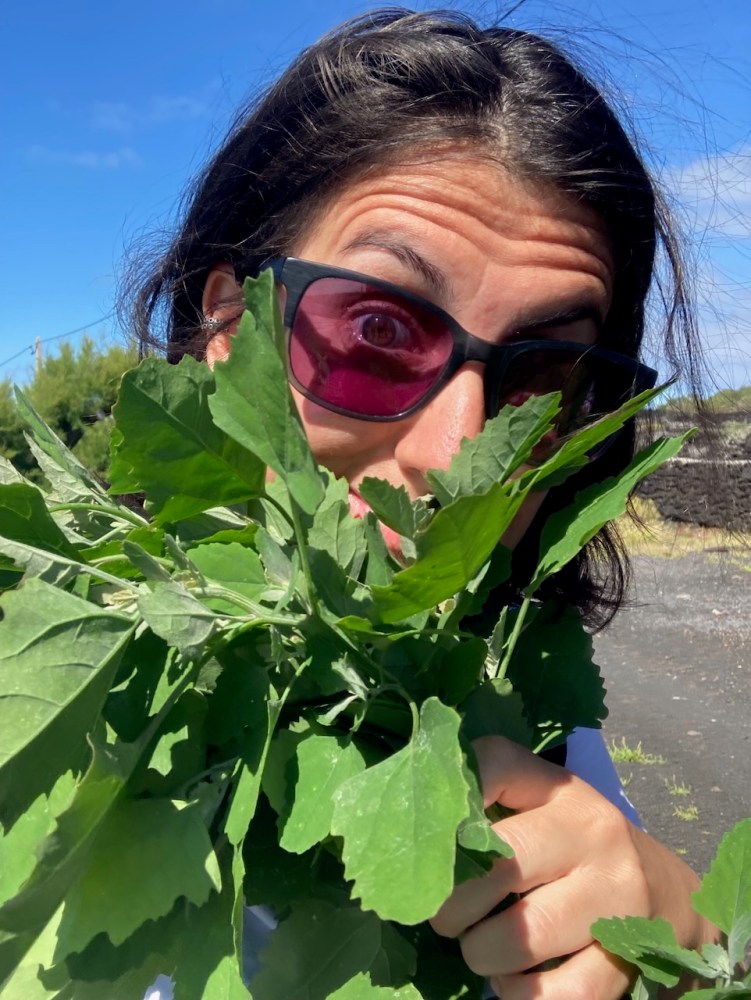
Zara Quiroga in Pico Island, back in 2021, already foraging!
Seaweed sat in the fridge, submerged in salted seawater to keep it fresh. Some herbs from Oh! My Cod’s garden were laid out beside trays of dough, jars of preserves, and bowls of vegetables from local growers who know, like the rest of us during those days, that the difference between a weed and a useful plant is often a matter of perception.
In the dining area, just across the counter, Oh! My Cod’s founder Sílvia Olivença and botanist Fernanda Botelho were dealing with a large batch of stinging nettles for soup. Fernanda described the task as depenar urtigas, literally “plucking nettles”, using a Portuguese expression that made everyone laugh because it sounded as though the plant was being treated like poultry. The joke helped, as did the fact that some of us were sipping lemon liqueur from Pico while doing these tasks, but there’s no denying that the work we were doing was real.
The plants had already been identified, discussed and gathered during the past couple of days. The next step was to cook them in a nutritious but also creative and delicious way, in order to feed a group of guests coming over the next day. Maybe guests didn’t have such high expectations, I wouldn’t be sure. But I know that, both Natacha and I would do our best, as if it was our task to “convince” them that eating wild plants was so worth it, thus completing the work Fernanda Botelho had started with her walks and talks just before we got to transform these wild plants into actual dishes.
A personal and symbolic journey through food and plant-based cooking
For me, there was also a personal dimension to being there. I had worked with Oh! My Cod in 2019 and for a couple of years, back in Lisbon, where the company first developed its food and cultural experiences, treating cuisine not just as a source of flavor but as a medium to explore local history and Portuguese life in a broader way. What interested us was never just the food itself, but what food could reveal about Portuguese life, local history, and the social worlds built around the table. Later, our professional paths diverged.
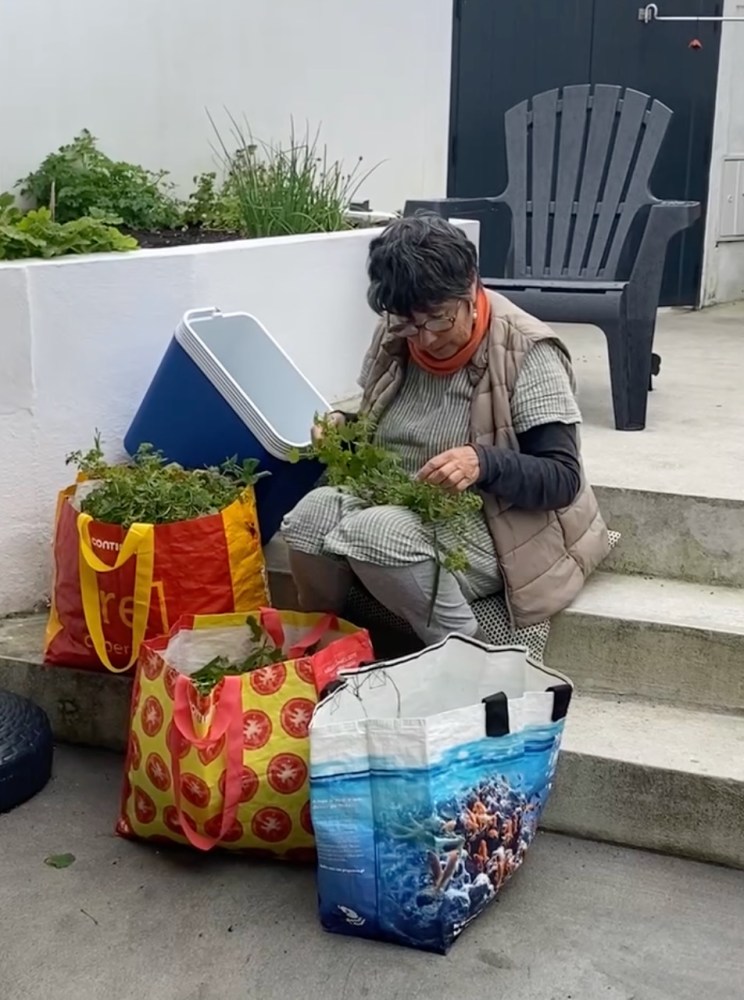
Fernanda Botelho, “plucking nettles” for hours. In this video, she explains how the nettle stings even helped reduce the swelling in her hand, which she had recently broken.
I became vegan and eventually developed my own work, which includes plant-based cooking, even though I still continued to think and write about food and the role it plays in local cultures and, very much so, in the experience of traveling as well. I had stayed friends with Oh! My Cod’s team throughout those years, because we share an immense love for food and appreciate how it works to bring people together, connecting them in ways that make us reflect on tradition, memory, and even a certain sense of belonging. So, standing there on Pico, cooking alongside Natacha, I had the feeling that something had come full circle. I was collaborating with Oh! My Cod once again, now making plants shine, as it’s been part of my mission over the past few years.
Beyond culinary tourism: food, hierarchy and cultural perception. What is a “Weed”?
What had brought us together was the Observatory Lab, a new line of work by Oh! My Cod that doesn’t really fit in the usual categories of culinary tourism, and I mean this as a compliment. We didn’t travel to Pico “just” for a foraging walk or a special dinner, certainly more experimental than the usual higher-end curated dinners Natacha does in Pico. This experience was even more than field research, something closer to an inquiry into how a place can be understood through what grows there, what people know about it, and even what might have already been forgotten (and how to bring that knowledge back). The broader Anthropologic Food Lab, of which this is part of, is built precisely around that overlap between research, food, memory, local knowledge and last, but certainly not least, actual practice.
That overlap has everything to do with the central question here, which is not just which wild plants are edible, but why some plants are recognized as food while others are dismissed as weeds. In fact, what gets called a weed is not a matter of botany, as “weed” is not a botanical category, but a cultural and economic judgment. The label reflects decisions about which plants are useful, which landscapes look acceptable, and which forms of life are allowed to remain visible. It is about status, hierarchy and habit, and about how certain ingredients, once part of everyday habits and important sources of nutrition, later came to be associated with the hardships of rural life and a certain embarrassment of having to make do with what was available. Now, we were exploring what happens when those same plants are reintroduced, not as relics, but as a way of rethinking food, local knowledge, and ecology.
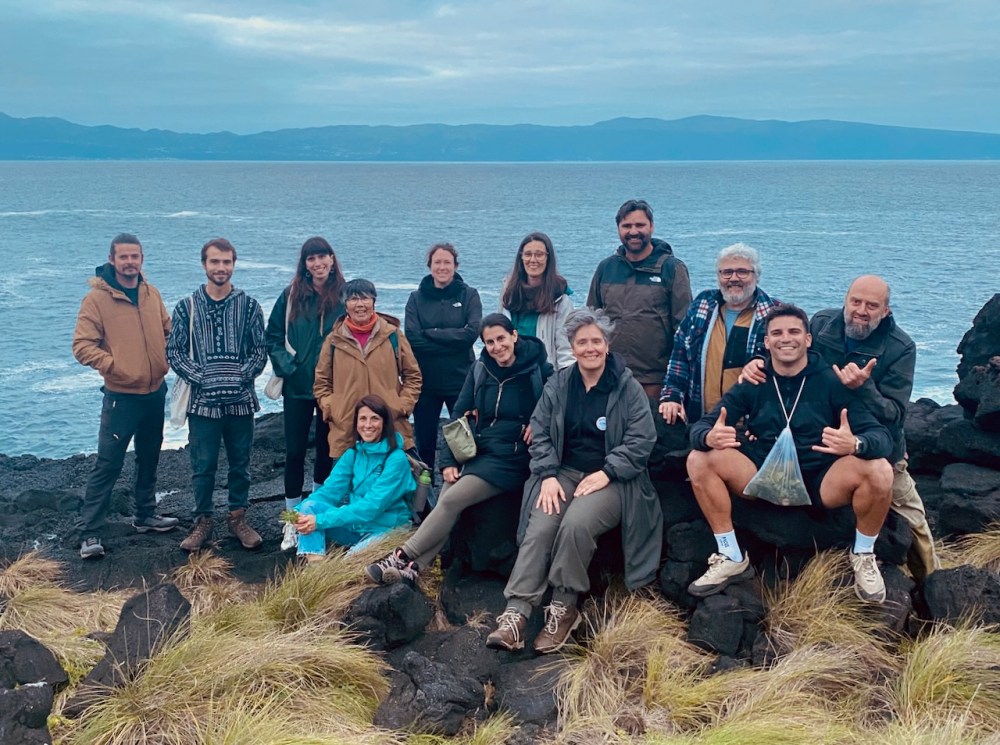
Second day on foot, finishing along the coast in Ribeirinha, Pico Island
Food, scarcity and memory: the Portuguese mainland and islands contexts
Portugal offers plenty of examples of this shift. As often happens in food history, the issue was never only whether these plants were edible, but also who had to eat them, under what conditions, and what social meanings became attached to that necessity. Plants now treated as niche ingredients, forgotten foods or the sort of thing only chefs and specialists care about have for a long time belonged to local foodways. We can think about more obvious examples like purslane soup (sopa de beldroegas), so characteristic of the Alentejo region. Or even wild asparagus collected during spring in different parts of the country, often enjoyed with scrambled eggs (ovos com espargos bravos). Of course we know things like infusions made with local herbs and soups based on what was seasonally available. We even have almost poetic examples like wild cardoon flowers, used instead of animal rennet, to curdle the sheep’s milk used to make such iconic cheeses from our country like queijo da Serra da Estrela. Once upon a time, and honestly it wasn’t that long ago, uncultivated plants like these were a part of how people fed themselves, particularly before buying everything from a shop became the default.
On the islands, this logic applied even more! Pico is a place shaped by its volcanic geology, difficult weather, periods of scarcity and also by emigration, which at different moments reduced the number of people available to work the land and grow food on the island. So what spontaneously grew around people mattered in a very immediate way, both for food and remedies. Wild plants are incredible, but when resources are limited or the supply is uncertain, it’s easy to understand how they become even more important.
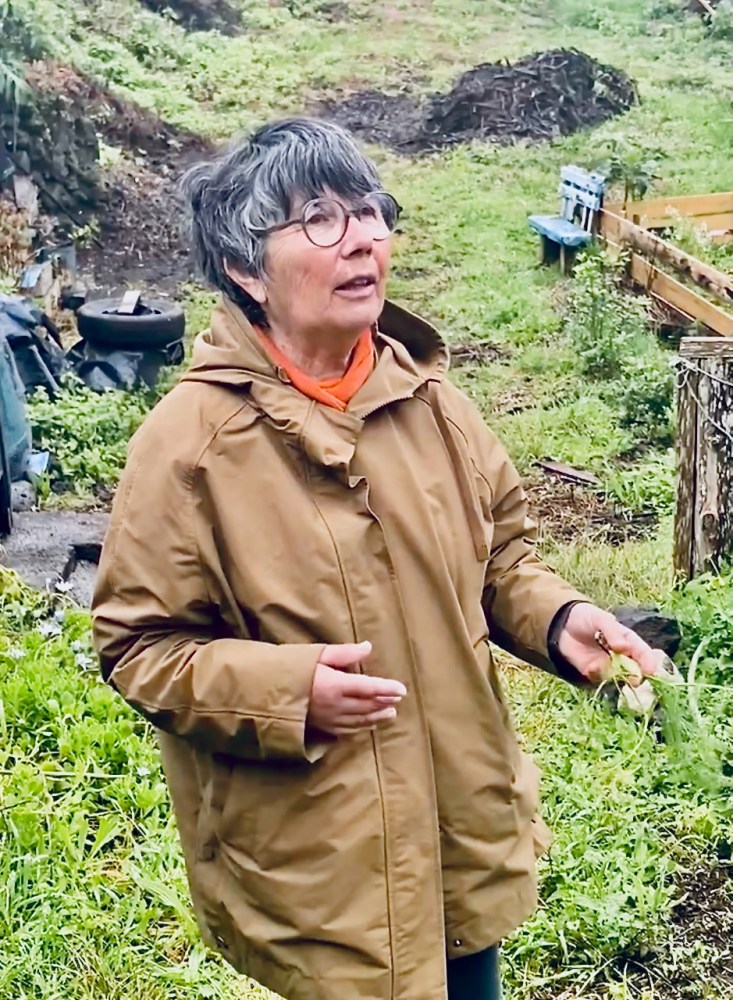
Fernanda Botelho at Aldeia Feliz (March 2026)
One of Sílvia’s key ideas in the original vision for the lab was to go beyond the status and hierarchy attached to wild plants, while also paying attention to local knowledge, especially in a place that has experienced different forms of food difficulty over time. It is one thing to talk abstractly about edible weeds. It is another to recognize that in places like Pico, people have had concrete reasons to rely more closely on what the land and shoreline offered. But the point was never to romanticize hardship, let’s be clear about that. It is to understand that knowledge born from necessity can still hold value, which can continue even after the social conditions that shaped it have changed.
Rediscovering edible landscapes as our ancestors did with a contemporary critical lens
To lead the walking component of the lab, Oh! My Cod invited Fernanda Botelho, one of Portugal’s most respected voices in the field of wild edible and medicinal plants. Her work focuses on helping people recognize, understand and revalue the spontaneous flora that so often goes unnoticed or dismissed as weeds. Bringing her into this first edition of the Observatory Lab gave the project immediate depth and credibility, as Oh! My Cod was not approaching the subject lightly or treating wild plants as a passing trend, but starting things off with a major reference in the field.
Fernanda Botelho was crucial in making the lab’s core argument tangible. Her walks were detailed but very accessible, even for those who arrived with little more than curiosity. We had a mixed group during these walks, which made the exchange richer. There were a couple of mountain guides, people involved in small-scale organic farming, Picarotos (that is, Pico locals), foreigners who now call Pico home, a couple of chefs, and participants whose interests ranged from food and medicinal uses to simple curiosity. Fernanda would stop, point, identify a plant, and then open up a broader conversation. Sometimes the focus was that only part of a plant was edible. Sometimes it was about timing, and how a species should be harvested at a certain stage of growth. Sometimes it came down to language, and to how the same plant could have different common names depending on where you were, even within Portuguese-speaking contexts. In a group that included both local and international participants, that often opened useful comparisons. One person knew a plant from cooking, another from herbal infusions, another from cosmetics or medicinal uses.
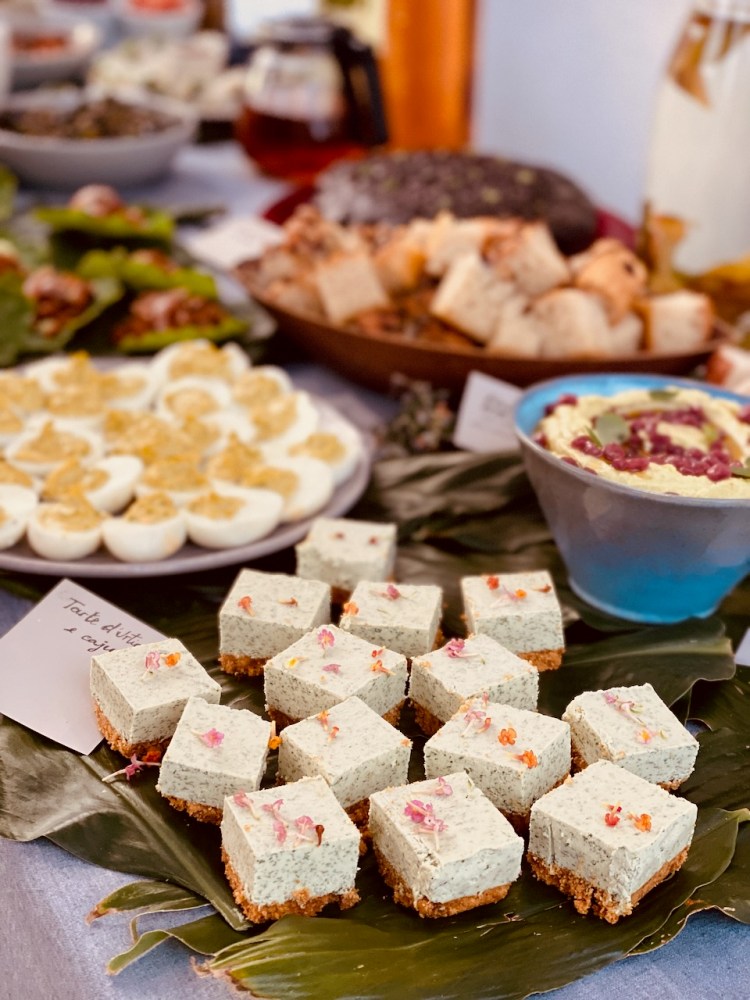
Same tastings prepared after two days foraging (March 2026)
The walks took place in early March, under typical Pico weather, including wind, clouds, and the constant possibility of rain, though we were lucky to avoid it. We moved through Ribeirinha and São João, following routes that began a little inland and gradually took us closer to the coast. We were neither in the vineyard landscapes nor in the mountain area either, which are the parts of Pico most travelers visit and that can be best enjoyed via other Oh! My Cod food, wine and cultural experiences in Pico. Instead, these were routes lined with spontaneous vegetation, the kind that can easily go unnoticed until someone teaches you how to look. It was incredible how many species Fernanda made us notice in the first 5 meters of the first walk itself! After that, it became difficult not to notice much more of what was growing around us.
Once your attention adjusts, the abundance becomes much harder to ignore, especially when you begin to recognize just how many edible or otherwise useful plants are growing in plain sight: mallow, periwinkle, borage, teasel, dock leaves, Herb Robert, apple mint, common poppy, heather, wild beet, fleebane, wild sage, wild asparagus, shrub verbena, Mexican tea, chickweed, clover, lesser calamint, curry plant, wild spinach, stinging nettle, rock samphire, nasturtium, heal-all, evening primrose, sawthistle, wild garlic, wood sorrel, viper’s bugloss flowers, navel wort, dandelion, wild pea leaf, fennel… turns out, even the younger tender leaves of the bramble plant, better known for scratching anyone trying to pick blackberries, are edible. Some of these plants were already familiar to participants, especially those more commonly recognized as edible, medicinal or aromatic, while others came as a surprise, but the more important realization was not simply that a given species could be eaten, but how much useful plant life most of us have been trained to overlook altogether.
That question of perception came up repeatedly in conversations with local participants. Several spoke about how older generations knew much more about edible and medicinal plants than most people do now. They mentioned uses that still survive in everyday life, like sea fennel (known in Pico as perrexil-do-mar) or fennel soup (caldo de funcho), and the broader fact that people once had a closer relationship with what grew around them. Today, most of us buy our vegetables from supermarkets and rarely need to ask what else is available outside that system. In the process, our food habits have narrowed dramatically. Figures from the Food and Agriculture Organization of the United Nations suggest that while thousands of plant species have fed humans across history, modern food systems rely heavily on a very small number of crops, and fewer than 200 plant species contribute substantially to global food output and just nine (sugar cane, maize, rice, wheat, potatoes, soybeans, oil palm fruit, sugar beet, and cassava) account for 66% of total crop production.
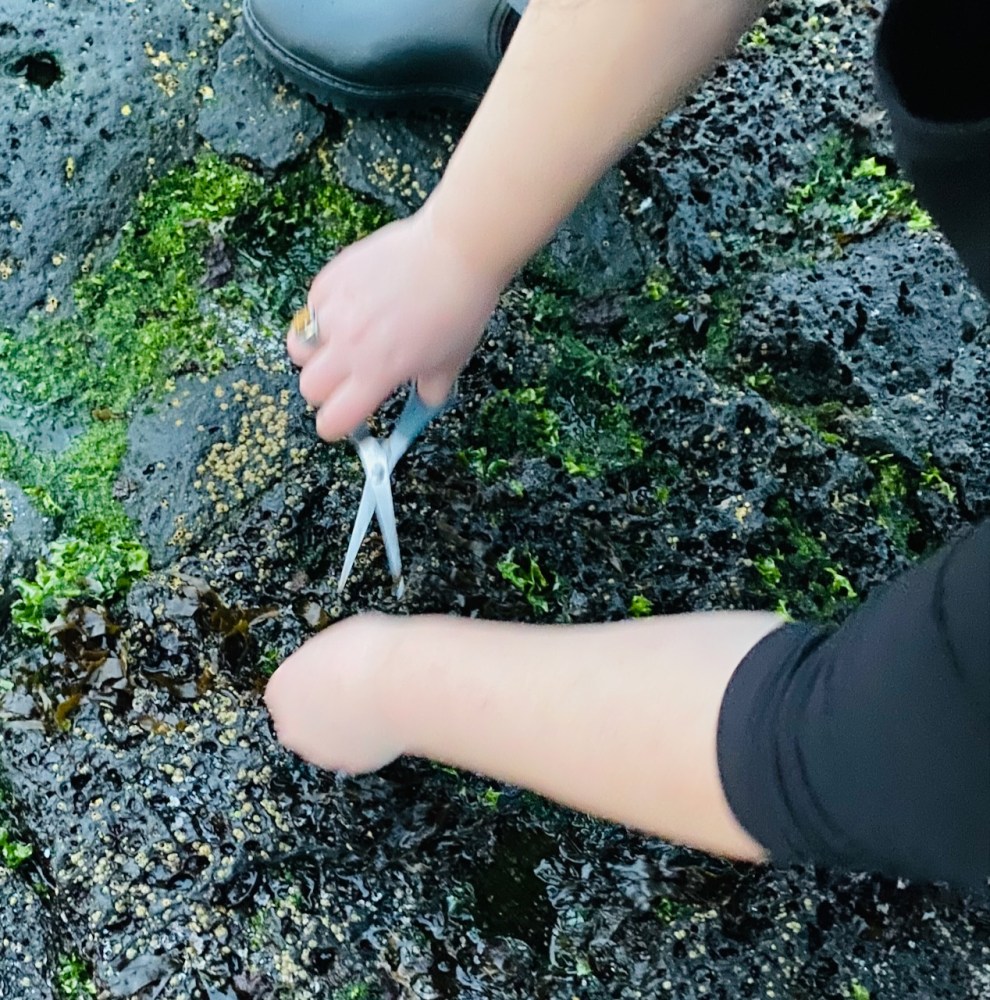
Natacha collecting Atlantic Nori (Porphyra spp.) in Pico Island. And later, Ulva Lactuca.
Modern food systems tend to trust certified, commercial, and standardized forms of knowledge much more than local, oral, or experience-based knowledge, even when the latter has helped communities feed themselves for generations. The irony is that this same knowledge is often rediscovered later through the language of sustainability, wellness, or culinary innovation.
Even before the official walks with Fernanda Botelho began, the lab had already started opening up those questions. On the first evening, just Silvia, Natacha, Fernanda and I went down to the shore to catch the sunset by Laja das Rosas and, spontaneously, collect some seaweed (good thing Natacha always comes prepared with material on the trunk of her car!).
The conversation moved quickly from harvesting to naming. In the Azores, common names can be confusing, with the same popular term sometimes referring to different species depending on the island and the context. We also realized that all four of us had, in one way or another, crossed paths with chef Joana Duarte’s Rota das Algas, and we found ourselves discussing not only sustainable seaweed harvesting but the immense potential of seaweed in Portuguese food systems. Later that night, we went to dinner at O Petisca and somehow forgot to order the sautéed erva-patinha we had been talking about. It was a small, ridiculous detail, but a memorable one. Especially because, when I had visited Pico almost four years earlier, also with Oh! My Cod, I had tried to order that same ingredient at the same restaurant and been told they didn’t have any. The explanation at the time was that climate shifts were affecting availability. The lesson was obvious enough, that edible landscapes are not fixed archives waiting patiently for our rediscovery. They are living systems, vulnerable to ecological pressure, pollution and climate change.
That vulnerability also has a more political side. On Pico, as in many places, rodenticides are used near residential areas where rats are an issue. The point is not to exaggerate that reality, especially when such areas are identified and people can be taught where not to collect wild plants. But it does raise a larger question, and that is that once landscapes are routinely treated as spaces to sanitize, control, or chemically manage, our relationship with spontaneous edible plants changes. We stop trusting them because we no longer know where they are safe, and eventually we may stop seeing them as potential food at all.
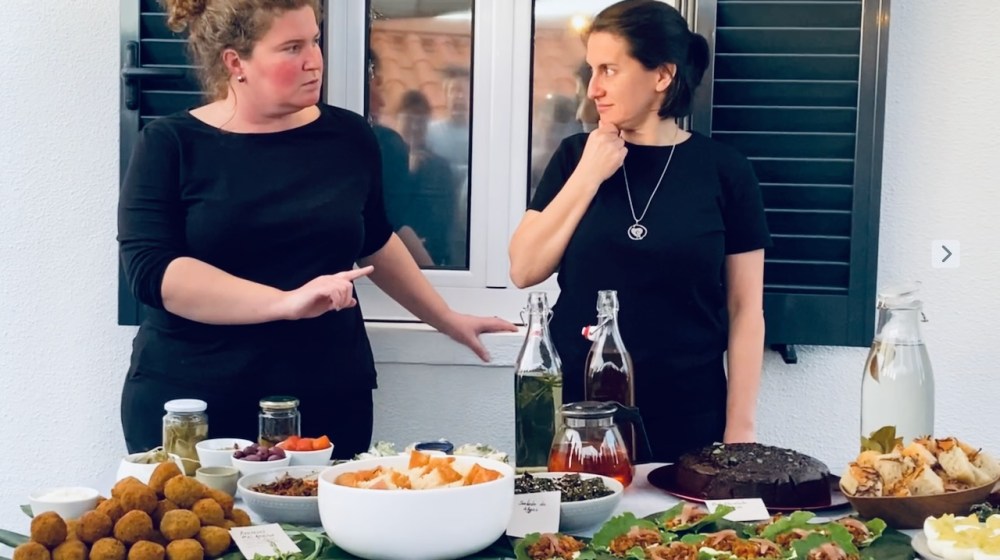
Natacha and Zara presenting the plant-based tastings done after two days foraging
The same applies in urban environments, where herbicides, aggressive maintenance, and the preference for visual neatness often reduce biodiversity and weaken people’s relationship with what grows around them. That hostility toward spontaneous plants is part of a wider politics of cleanliness, in which tidy, controlled landscapes are treated as more desirable than ecologically rich ones, even when that neatness comes at the cost of biodiversity and local knowledge. A society that poisons or erases its wild edges should not be surprised when it also loses the knowledge of how to use them.
That made the visits to local growers especially important. Before the first afternoon walk with Fernanda, we visited the plots of Décio, from Aldeia Feliz, and Andreia, from O Pé de Salsa, both of whom cultivate in ways that are small-scale and ecological. In their gardens, wild edible plants are not automatically removed, being mostly left where they are, because they are edible, because they are useful, because they attract pollinators, and because a productive growing space does not need to be ecologically simplified in order to function. Their contribution to the lab was not only in the ingredients they shared, but in the logic they embodied, as both Décio and Andreia represent a way of farming where cultivation can co-exist with everything spontaneous around it, in a healthy way.
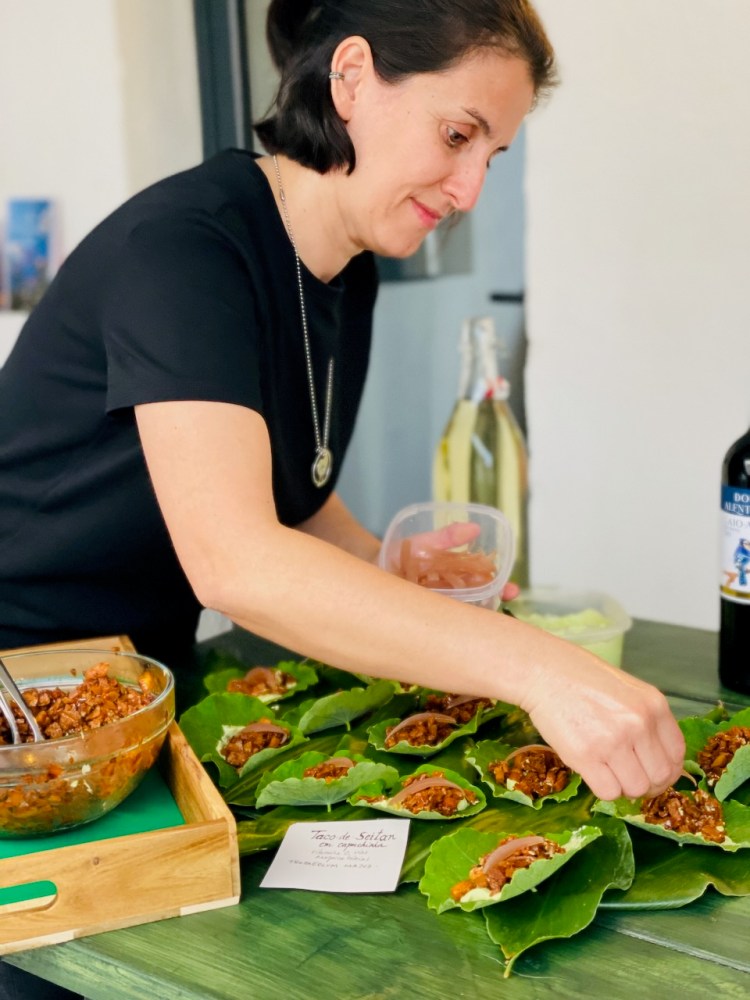
Zara preparing nasturcium tacos (March 2026)
From field to plate: when knowledge becomes taste and shared experience
Back in the kitchen, all the things that we had been observing and talking about had to be translated into actual food. One could argue that this is how a lab becomes especially convincing, by taking theory and putting it into practice. Looking and discussing edible plants, however fascinating, only goes so far. The real test is whether those plants can truly appeal in terms of taste, not just nutrition, and be something people would genuinely want to eat.
The meal chef Natacha Dias and I prepared was built around that challenge. We did not want the evening to revolve simply around unusual ingredients, but around the creative ways they could be transformed into something surprisingly delicious. We wanted to make ingredients that are usually ignored (and, in some cases even looked at with some suspicion) into the stars of the night, so that moving forward other people could also treat them with care and ambition in their own kitchens.
One of the snacks we served was arancini mal-amados, which jokingly took their name from the Portuguese expression ervas mal-amadas, literally “unloved weeds”. These green arancini were prepared with rice and a mix of wild leek, dandelion greens, mallow, navel wort and wild pea leaves. These were plants that many people still overlook or pull out of the ground without a second thought, now turned into something fried until crisp outside and soft on the inside. More than simply being tasty food, this was an example on how we could work towards starting to change the emotional register around these ingredients.
The nasturtium tacos also worked very well, with nasturtium leaves, naturally peppery and full of character, as the base for seitan cooked with onions and local pepper condiment pimenta da terra, sharpened with a sorrel mayonnaise whose stems, leaves and flowers brought a citrussy brightness that cut through the richness beautifully. That was also the dish that converted one of the evening’s skeptics, a self-described bushcrafter and committed meat eater whose wife had not been sure he would even come to dinner once she realized there would be no meat on the table. The first thing he picked up from the buffet was one of the nasturtium tacos. He took a bite and immediately said, “I’m converted”. He was convinced that wild edible plants could be delicious, yes, but also that fully plant-based food did not have to feel like a compromise. As someone who cooks this way all the time, I have to admit there are few things more satisfying than watching a committed meat eater realize, in real time, that pleasure was never in question when removing animal products from the equation.
The comforting tray of lasagna Natacha took out of the oven in the middle of dinner, just when people thought they had reached their limit after a wonderful array of appetizers, was prepared with creamy ricotta and wild spinach, also known as New Zealand spinach. Cooking greens tends to have this unexpected side effect of humbling you, as you start with what looks like a mountain of leaves and, just a few minutes later, it looks as though most of it has vanished.
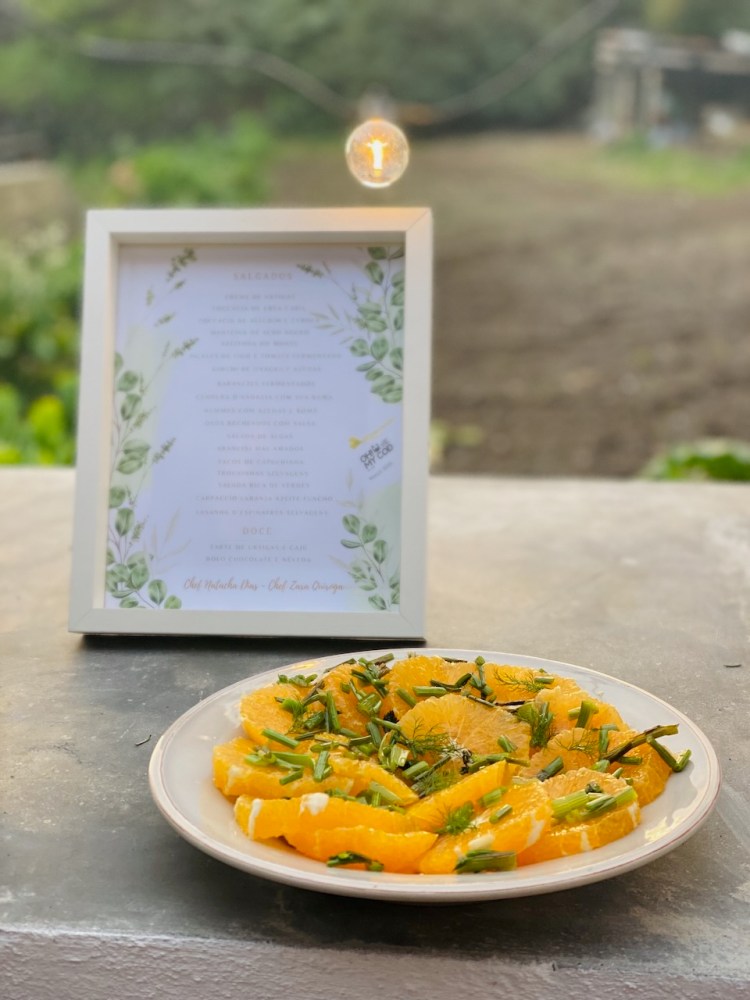
A menu featuring over thirty innovative and creative tastings!
Other dishes on the table included ferments and preserves, helping us showcase how fermentation can be a useful strategy to enhance flavor and also to extend the life of fragile wild plants before they wilt away. There were hot and cold infusions made from herbs we had been discussing during the walks, and plenty of other dishes that made use not only of wild species, but of edible parts of more familiar cultivated plants that people routinely discard without thinking.
Stinging nettles offered another good example of how the meal worked with both familiarity and surprise. Soup is perhaps the most obvious route for an ingredient like nettle, and ours was flavorful and unexpectedly creamy. I’m glad it turned out so well, also because it honored the work Fernanda and Sílvia had undergone, cleaning those piles of nettles. But we also wanted to push beyond the expected, making a raw vegan nettle tart, as we knew nettles don’t often show up as dessert.
Some of the plants we cooked with were already familiar to participants, especially those more commonly recognized as edible, medicinal or aromatic, while others came as a surprise, but the more important realization was not simply that a given species could be eaten, but how much useful plant life most of us have been trained to overlook altogether.
Many of the savory foods above were served atop kahili ginger leaves, which Fernanda collected on her morning walk close to the house, as we kept on cooking. Their use instantly reminded me of South Indian thalis served on banana leaves, and with that came the familiar ache of food nostalgia.
By the end of the meal, what had started as observation in the field just a couple of days ago, had become something tangible and memorable. Plants that had first appeared by the sides of paths and were botanical curiosities, had become dinner, during a beautiful evening full of food, but also interesting talks and shared experiences.
The future of Oh! My Cod’s Anthropological Food Lab
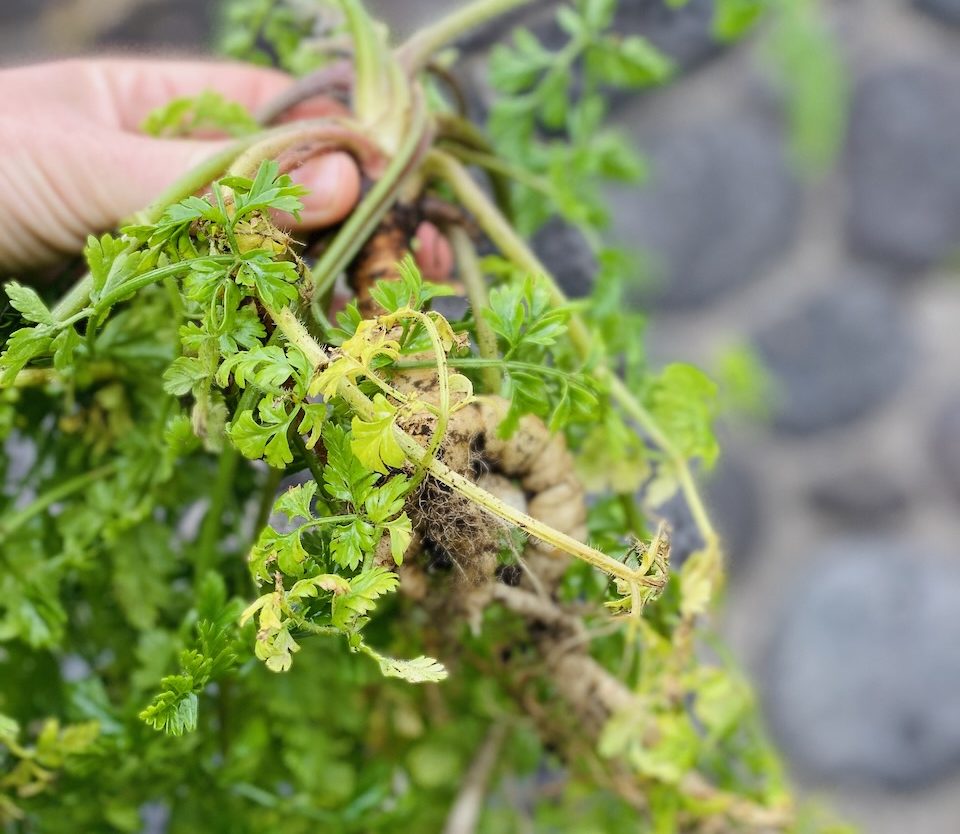
Another moment from those days stayed with me for a different reason. Near Lajes, after visiting our friend Adrian, who works with hydroponics, watches for whales off Pico’s coast, and makes remarkable wooden pieces inspired by them, we walked down toward the shoreline and started collecting wild spinach for Natacha’s lasagna. Somewhere along the way, Fernanda pointed out a wild carrot. We all admired it, brought it along, but never actually ended up using it in the meal. On our last day on the island, just before flying back to Lisbon, we tasted it raw and, even though it was white, it did indeed taste of carrot. But it was so incredibly fibrous that it made us think about how the vegetables we are used to consuming nowadays have been bred for tenderness and sweetness. Yet, when people speak casually about eating like their ancestors did, especially lately with paleo diets trending, they rarely picture themselves chewing through one of these tough carrots, let alone handling stinging nettles with their bare hands.
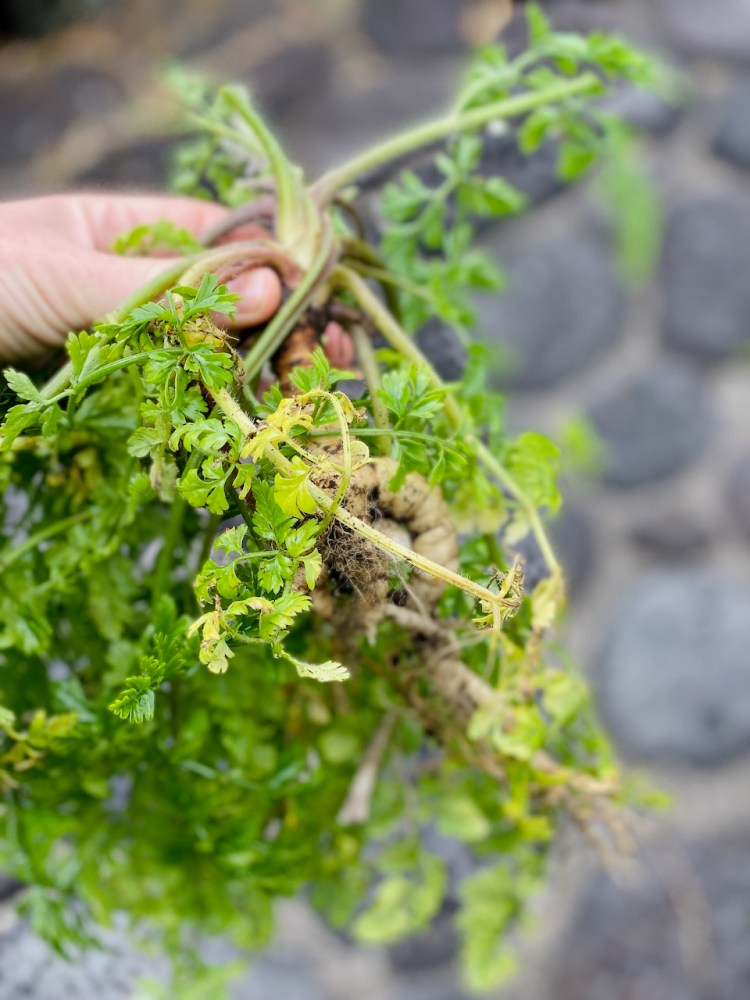
Wild carrot from Pico Island (March 2026)
We could not finish the carrot because, despite being small, it was not especially tasty raw and the texture was far from pleasant. In a way, that was useful. It stopped us from romanticizing the work we had been doing over those three days. The point was never to fantasize about returning to some “purer” past, and certainly not to romanticize scarcity. Wild edible plants are not automatically valuable simply because people once depended on them, nor should they be turned into fashionable garnish just because contemporary food culture has started paying attention to them again. What makes them important is that they help show how food systems are shaped not only by ecology, but also by power, class, memory, and by the kinds of knowledge a society chooses to take seriously. They also make us ask what has been lost as people have grown more detached from the environments around them.
There are easier ways to build a food experience. You can keep it light, attractive, and detached from the social and ecological realities behind what people eat. What happened in Pico was different. It asked more of everyone involved, but it also offered more in return. Oh! My Cod’s first Anthropological Food Lab combined research, walking, observation, local collaboration, cooking and eating together in a way that made all of these things part of the process. The aim was to better understand how a place feeds itself, what knowledge still survives there, and what might still be recovered or given new value. At the same time, it created space to ask more difficult questions about what counts as food and who gets to decide that.
That is why this Pico experience matters beyond the island itself. It offers a model that Oh! My Cod plans to continue developing and one I would gladly be part of again. Future observatories and upcoming experiences are already planned for the Alentejo. People may also have the chance to forage there, but the larger goal is to build food experiences that treat landscape, local knowledge, and cooking as connected ways of understanding a place.
Part of what makes the future of this lab so exciting is thinking of some of the flavor combinations that we explored in Pico and which may well return in future experiences, whether on the island itself or elsewhere. At the same time, the dishes will never be exact replicas, because the plants available will always depend on the season, the weather, and the specific landscape being walked. Even in the same place, at a different time of year, the experience would not be quite the same. That allows the lab to keep evolving, with each edition shaped by what the territory is ready to offer, and also complemented by the local knowledge each place still holds.
That approach takes attention and responsibility, but not at the expense of flavor or pleasure. Certainly not when chef Natacha Dias and Oh! My Cod are involved.
Article by :
Zara Quiroga (freelance food writer and food & cultural leader at Oh! My Cod Pico Trips)
Photos:
Sílvia Olivença (anthropologist and food guide/CEO at Oh! My Cod Ethnographic Food Tours & Trips)
Want to more about Portuguese cuisine and its influences?
Foodcapes: walking routes of Pico Island
A guide to honey in Portugal: from the mainland to the Azores
Slow food travel and immersive culinary experiences in Portugal
