

HOW TO ESCAPE CROWDS AND HEAT DURING SUMMER MONTHS IN LISBON

These days, at least two Lisbons seem to coexist all year round.
One is the Lisbon that has become part of the international travel imagination, featuring old neighborhoods, hilltop viewpoints, tiled façades, yellow trams, melancholic fado music, flaky custard tarts still warm from the oven, seafood dinners and the idea of a small Atlantic capital that can somehow be “done” in a long weekend.
The other Lisbon is the one that city dwellers negotiate every day, where ordinary routines are of course inevitable, but that also includes favorite cafés, neighborhood restaurants, local markets, public gardens, suburban plans, friends who live across the river, and places that rarely make it into a first-time visitor’s itinerary. This is the Lisbon we try to bring people closer to through Oh! My Cod experiences. Of course we do not think visitors can magically “live like locals” after a few hours together, but we can indeed share some context, habits, food and ways of looking at the city that make Lisbon feel less like a “destination” and more like a place where people actually live.
During the summer months, these two parallel Lisbons become even more visible.
On one side, there is the historic center under strong light, with long queues for the popular Tram 28, crowded but still stunning viewpoints, the line outside Pastéis de Belém (Rua de Belém 84) to eat a warm pastel de nata in the place where it was allegedly invented, day-trip traffic towards Sintra, packed trains to the nearest beaches, and the sudden realization that walking up and down the city of seven hills is not that pleasant when the temperature rises above 30°C / 86°F.

We wouldn’t say to skip these miradouros as they are indeed stunning, but try to go early in the morning or later in the evening, during lusco-fusco time.
Then there is the Lisbon locals deal with every summer, which changes not because of tourism as such, but because our very own habits tend to change during the warmer months. People adjust their schedules, avoid unnecessary climbs at the worst hours, sit in gardens, cross the river, choose cafés with shade, eat more grilled fish and seafood, favor colder drinks, and save certain pleasures for after sunset. Summer does not make Lisbon stop, but to make the most of the city, you do have to keep certain things in mind.
Many travelers arrive in July and August with the same plan they would use in March or November. This may include long walks through exposed streets, famous sights at any given hour of the day, and perhaps meals in the busiest parts of town. Depending on your stamina, this may result in the tiredness and even frustration that naturally kick in when it’s too hot, there are too many people around, and the city starts to feel more stressful than it needs to be.
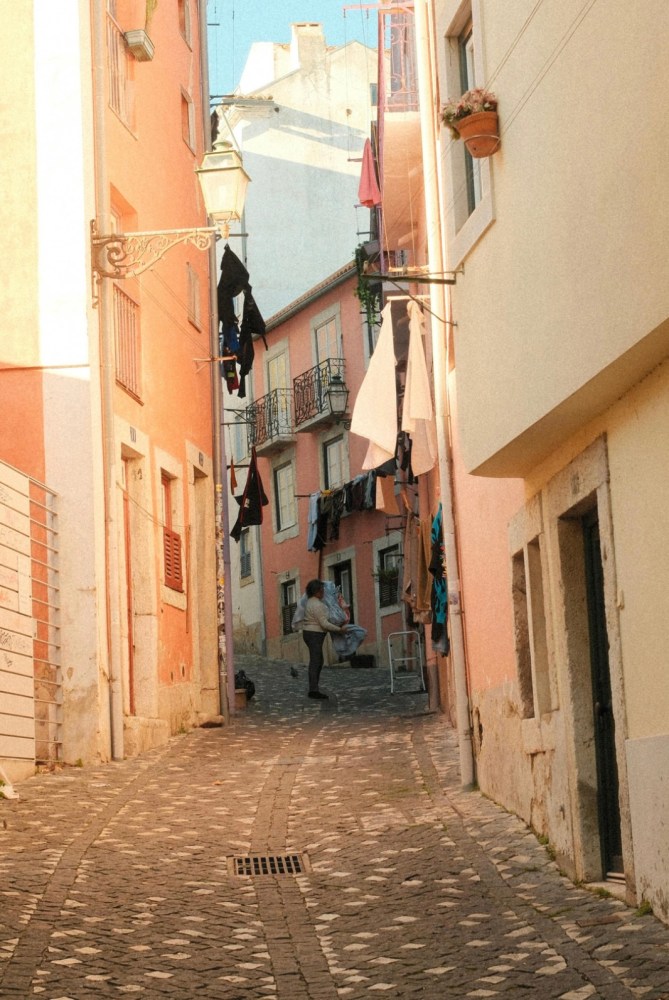
In old neighborhoods such as Alfama, the narrow winding streets and closely built houses create pockets of shade and cooler air.
The alternative is not to avoid the city, as Lisbon can be great even during the peak of summer, but you should understand how summer works here. June begins with the Popular Saints festivities, when Lisbon’s old neighborhoods organize street parties with loud music and grilled sardines. Because of holidays in many parts of the world, July and August bring more visitors, but also stronger heat, longer days, beach plans, outdoor concerts, late dinners, cold drinks, snails in neighborhood cafés, and a constant search for shade.
If you are traveling to Lisbon during the summer, don’t just hide in air-conditioned places until dinner. Look for places and activities that work better during the hottest months, while still allowing you to immerse yourself in the beauty and culture of the Portuguese capital.
Slow down and find cultural refuges from the heat
During summer, a slower travel itinerary tends to work better. The city is hilly, many streets are exposed to direct sun, with the traditional limestone pavement reflecting heat, so moving around neighborhoods can take a lot of energy even if distances aren’t particularly long. During warmer days, a good plan should ideally involve some transportation, longer meals, places with shade and enough time to change directions or the overall plan if needed.
This is also how many locals use the city during the warmer months. Besides work obligations, leisure plans are often organized around temperature and convenience, and may involve an early errand, a coffee in the shade, lunch somewhere familiar, a pause at a public garden, a beach plan, a drink after sunset or a late dinner. These things may seem ordinary, but they are also part of the culture of the city.
For visitors, this means that a meaningful day in Lisbon doesn’t necessarily have to revolve around popular sights and monuments. You can do those, of course, but you can also simply sit at a kiosk in a public garden, browse a bookshop, go to a neighborhood market, or cross town for a simple lunch. This is especially true in summer, when Lisbon’s everyday simple pleasures become more visible. We would argue that watching and joining some of these habits is a legitimate way to experience Lisbon, even more so than following a classic sightseeing plan during the hottest hours.
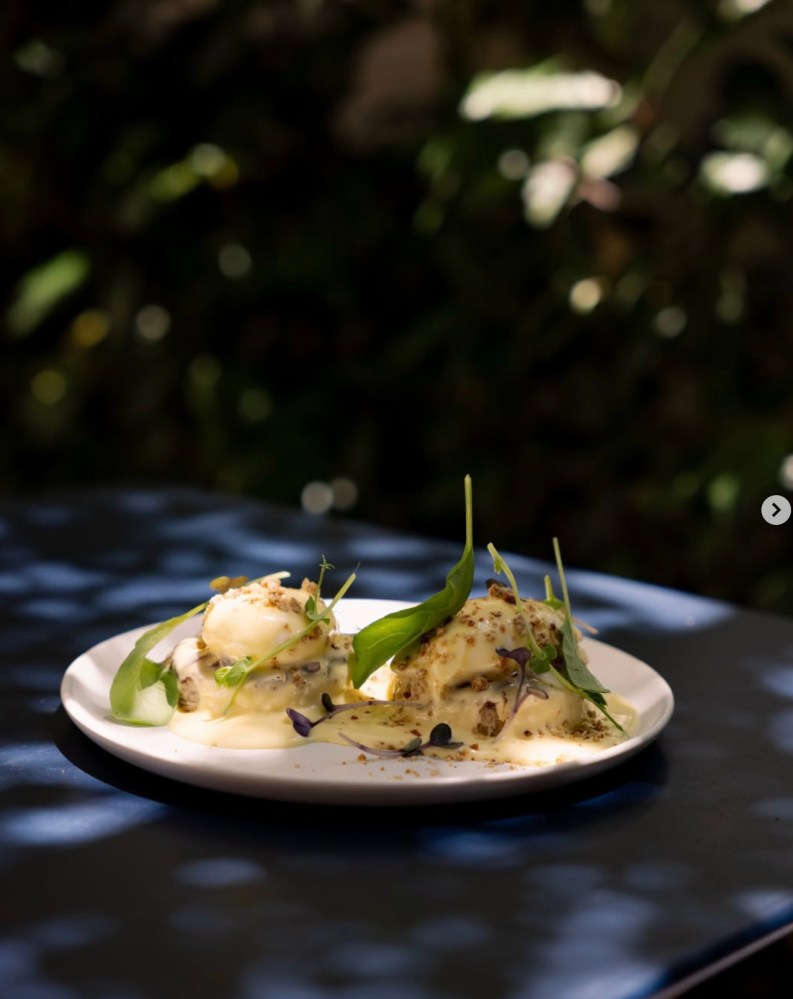
Clara Café at Brotéria Photo: Brotéria.
During the hottest part of the day, it helps to choose places that work as refuges rather than just attractions. We’re not only referring to museums with air conditioning, although those are useful too, but places where you can step away from the heat and the crowds without stepping out of the city’s culture. A good refuge can be a quiet museum café, an independent bookshop, a shaded garden, a cultural center with exhibitions, or a church with thick walls where there’s no need for air-conditioning. Lisbon has plenty of these quieter religious spaces and some we would recommend checking out include baroque Igreja de Santa Catarina (Calçada do Combro 82A), between Bairro Alto and Bica; Convento dos Cardaes (Rua de O Século 123), near Príncipe Real; Igreja de São Cristóvão (Largo de São Cristóvão), in Mouraria; and Igreja de Nossa Senhora da Conceição Velha (Rua da Alfândega 108), as an example of post-earthquake history in Baixa. These are the kinds of places where you can step away from the heat and the street for a few minutes while observing Lisbon’s architecture.
Around Chiado and Bairro Alto, Brotéria (Rua de São Pedro de Alcântara 3) is also a good example of this kind of place. Created by Jesuits, it is connected to one of the oldest Portuguese magazines still in print, but today it works as a cultural space for reflection, debate, exhibitions and conversation. At its café, Clara Café, you can slow down while sipping a coffee, infused drinks, homemade savory food and cakes, enjoying a quieter ambiance than what you usually find a few streets away in the busiest parts of the center. Almost across the street, the café at the Museum of São Roque (Largo Trindade Coelho) has often been one of those rare central Lisbon places where you can sit down and hear yourself think. The museum and church are also worth visiting, particularly if you are interested in religious art, history and tiles.
Away from the city center, you can find even more places with cultural interest where it also makes sense to take a break from the heat and the crowds. In Campo Grande, the Bordalo Pinheiro Museum (Campo Grande 382) shows a more eccentric side of Portuguese visual culture, with caricature, ceramics, political satire and the work of Rafael Bordalo Pinheiro, the artist behind the famous cabbage-leaf ceramics that many visitors will notice in shops around town.
In Belém, when the area around the monastery and the riverfront feels too exposed, the Centro Cultural de Belém (Praça do Império) is a useful refuge, with contemporary art and architecture exhibitions, performance spaces, bookshops, cafés, restaurants and enough interior space to make the neighborhood appealing even during the hottest hours. Gulbenkian (Av. de Berna 45A) offers a similar kind of pause in a different part of the city, featuring exhibitions and cultural programming indoors when the sun is too strong, followed by time in the gardens later in the afternoon, when the shade, water and trees make it one of Lisbon’s best places to slow down without leaving the city.

For something less institutional, look at independent galleries, bookshops and cultural spaces that are worth visiting for their atmosphere, exhibitions, architecture or café life, even when you are not going to a specific event. Marvila and neighboring Beato have become some of the city’s most interesting areas for contemporary art, breweries and cultural projects, with spaces such as MAD Marvila (Fernando Palha 1), 8 Marvila (Praça David Leandro da Silva 8), Fábrica Braço de Prata (Rua Fábrica de Material de Guerra 1) and galleries around the Beato-Marvila axis giving visitors a reason to go east. This is a more industrial side of Lisbon that is booming with creativity, where you could go for an exhibition, browse a cultural space, grab a craft beer or sit down for food away from the usual tourist route downtown.
Bookshops can also be a pleasant and meaningful stop in Lisbon. Around São Bento, Palavra de Viajante (Rua de S. Bento 34) is entirely dedicated to travel books, guides and literature about places, which makes it a much more interesting pause than another generic souvenir stop. In Arroios, Tigre de Papel (Rua de Arroios 25) mixes new and second-hand books, small publishers, postcards and illustrations. Around Príncipe Real, Fable Bookshop + Coffee (Rua dos Prazeres 10A) is a coffee shop dedicated to books and reading on-site, while more specialized places such as Under the Cover (Rua Marquês Sá da Bandeira 88B), dedicated to independent magazines, books and print culture, can turn a hot afternoon into a slower cultural detour. Another favorite is Livraria da Travessa, in Príncipe Real (Rua da Escola Politécnica, 46), where you can buy your book and bring it to one of the most beautiful gardens in Lisbon, two steps away, where you can also sip a coffee in the shade.
Build your day with pauses like these and keep in mind that browsing a bookshop, visiting a small exhibition or simply sitting down at a museum café can be enjoyable and very real ways to understand how the city is actually used.
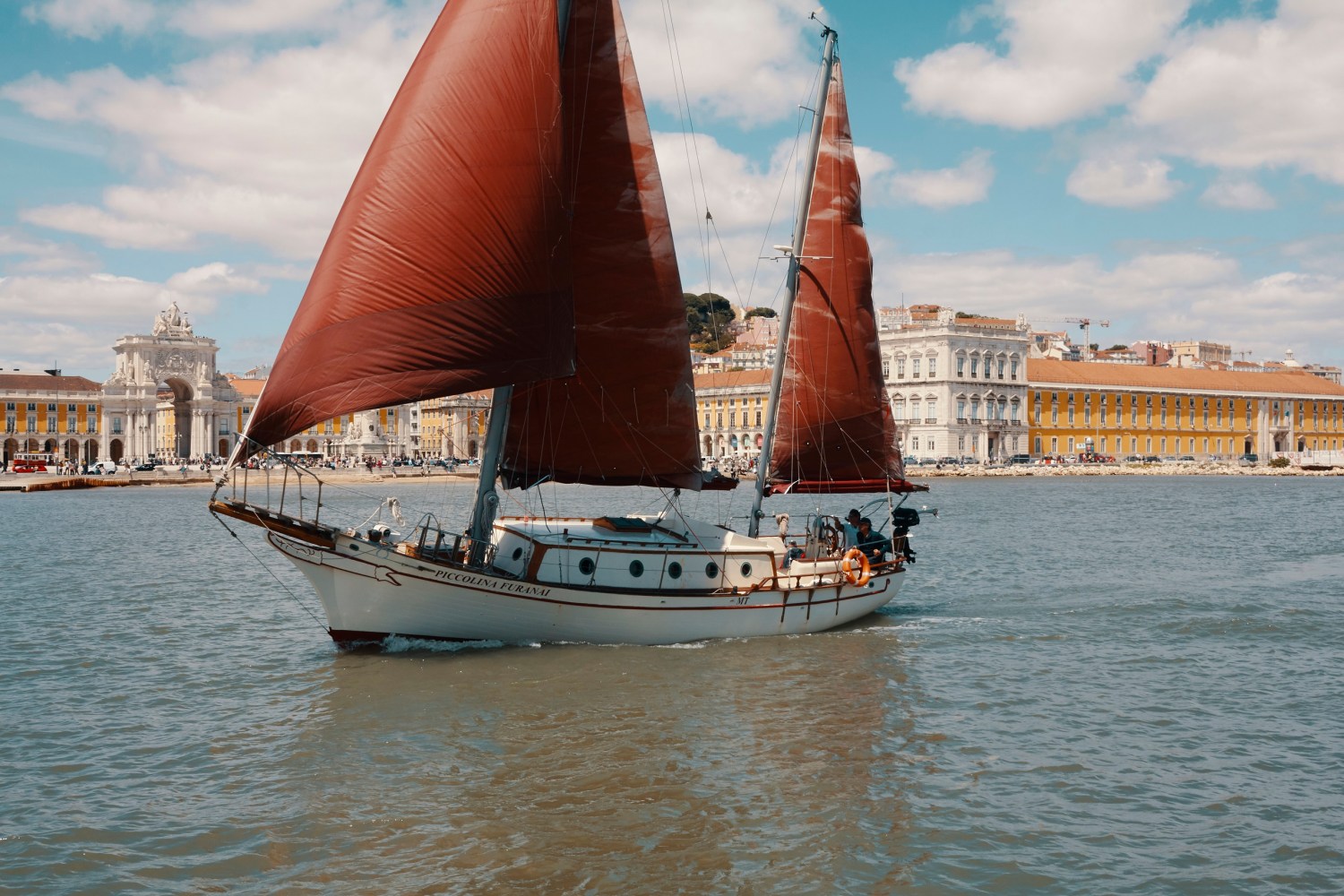
Furanai vintage boats
See Lisbon from the water
One of our favourite ways to do this is with Furanai Sailboat Tours. They’re not only passionate sailors but also good friends of ours. Their vintage sailboats create an intimate and relaxed atmosphere that’s very different from the larger tourist cruises. With small groups and a knowledgeable crew sharing stories about Lisbon, it feels less like a sightseeing tour and more like spending an afternoon on the river with locals. Local wine and tapas are served on board, which makes the experience even more enjoyable.
Don’t just see Lisbon, check what is happening
Summer in Lisbon has a very active cultural calendar, and many plans work best once the heat softens later in the day.

Open-air concerts, film screenings, markets, neighborhood events and food-related gatherings can give you a good reason to move through the city with more purpose, especially when they take place in gardens, cultural associations or public squares.
Music is a good place to start, especially because several summer events happen outdoors and later in the day, when Lisbon becomes easier to enjoy. OutJazz is one of our favorites, taking place from May to September, featuring free concerts in gardens and open-air spaces in nearby Oeiras, just a short train ride away from downtown Lisbon, mixing jazz with soul, funk, R&B and electronic sounds. Jazz em Agosto, at Gulbenkian, is a more experimental ticketed event, with concerts indoors but also in the open-air amphitheater between late July and early August. It is also worth checking the summer agendas of CCB, Gulbenkian, EGEAC venues and independent spaces such as ZDB, Damas, BOTA, Sirigaita, BUS – Paragem Cultural, Fábrica Braço de Prata and Jardins do Bombarda, where the program may include concerts, DJ sets, performances or small neighborhood events depending on the week. Some are free and some are paid, but, no matter what, it is best to always check the agenda before going there.
Open-air cinema is another summer classic and, in Lisbon, CineCapitólio Rooftop, CineConchas, Black Cat Cinema and similar projects use rooftops, gardens, courtyards and unusual buildings to turn a hot evening into a reason to stay outside after sunset. The film may not even be the only point as they often play classics many of us have already seen before, but the setting, and the drinks you may or may not get before or after the movie plays, plus the fact that you are doing something you can truly only do outdoors in summer, already make the plan feel worth it.
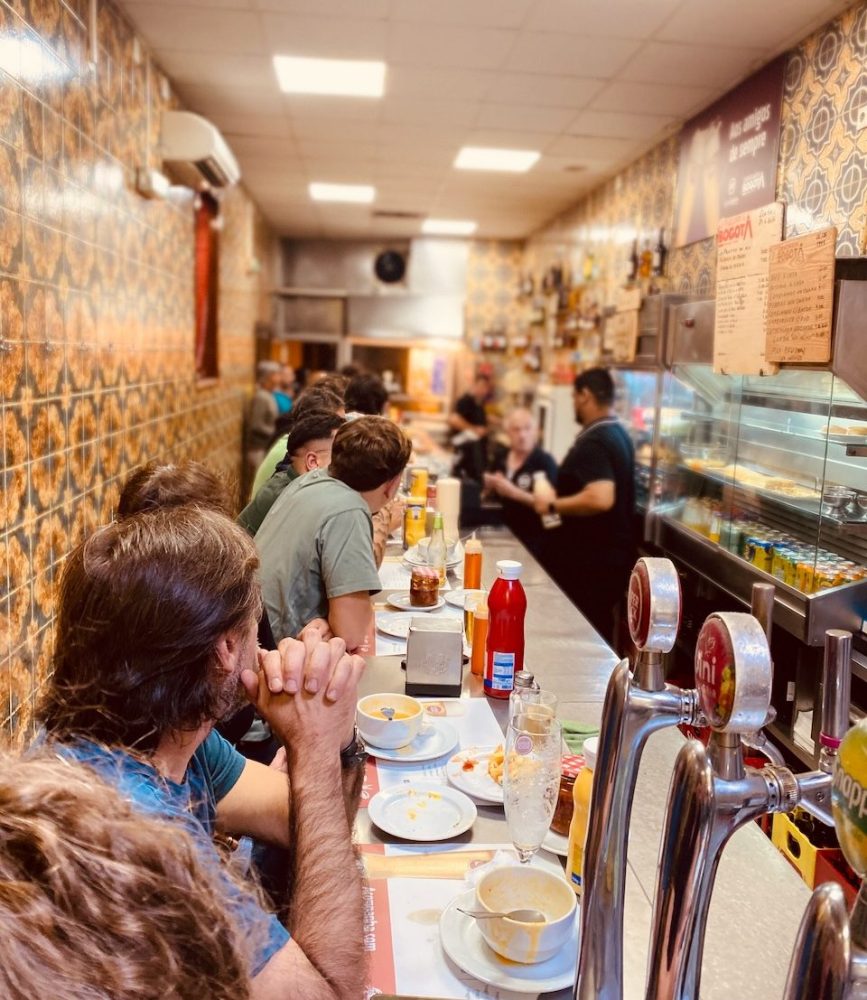
Bogotá Cervejaria at 11.30 PM. Photo: Sílvia Olivença
Cuisine can also be part of what you do in Lisbon and, while we will get to specific dishes, drinks and places to eat further down, it’s also relevant to highlight how there can be food-related events worth checking during the summer in the Portuguese capital. In Lisbon, food-related programming tends to appear around street parties, cultural festivals, regional markets and even immigrant community events, and not necessarily just food festivals in the more traditional sense. The Popular Saints festivities in June are a good example of this, as this is when neighborhood street parties (arraiais) fill the city with grilled sardines, pork sandwiches, savory fritters, collard greens soup (caldo verde), beer, music and temporary street stalls. The peak nights are usually very crowded, especially around Santo António on the night of June 12th, so try going earlier in the evening, choosing smaller arraiais in less obvious neighborhoods, or enjoying the days around the celebrations instead of aiming only for the main nights.
Other food-related events worth checking throughout the summer include the Lisbon Vegan Market, which brings together plant-based food, small producers and ethical projects that will help contrast the usual ideas of Portuguese food. Feira Cultural Latino-Americana, which usually takes place at Fábrica Braço de Prata, combines Latin American food, music, workshops and performances in a format that feels like a community gathering. Events such as Jardim de Verão at Gulbenkian, in a way we also explore during our Original Lisbon Food & Wine Tour, showcase the connections between Portuguese life and the cuisines and broader cultures of our former colonies. Food may not be the main theme, but it tends to appear to help illustrate how what we eat is indeed also cultural and contemporary Portuguese city life has been shaped by history and migrations.
It may also be a good idea to look beyond Lisbon proper, especially if you enjoy plans surrounded by locals. Amadora, for example, is only a short train or metro ride from the center, but an evening at Bingo da Amadora, followed or preceded by a Portuguese-style beef sandwich (prego) at the old-school Cervejaria Bogotá, gives you a very different kind of night out. Across the river, Barreiro is another good option, where you could for instance check out ADAO, an independent cultural association with exhibitions and concerts, then walk towards river beach Alburrica for windmills and one of the most unexpected views back towards Lisbon. Seixal can also work well for a slower afternoon or evening, with a ferry crossing, a walk along the riverfront, and a stop at Oficina de Artes Manuel Cargaleiro, designed by well-known Portuguese architect Siza Vieira and dedicated to contemporary art. These are not “must-see” detours for everyone, but they are the kind of plans that help you understand Lisbon as a metropolitan area, not just a city with a specific historical centre.
Before your trip, and again while you are here, besides checking directly with the venues and event organizers we have recommended above, we’d say it’s also worth looking at Agenda Cultural de Lisboa and Visit Lisboa’s What On, to see what is happening in Lisbon.
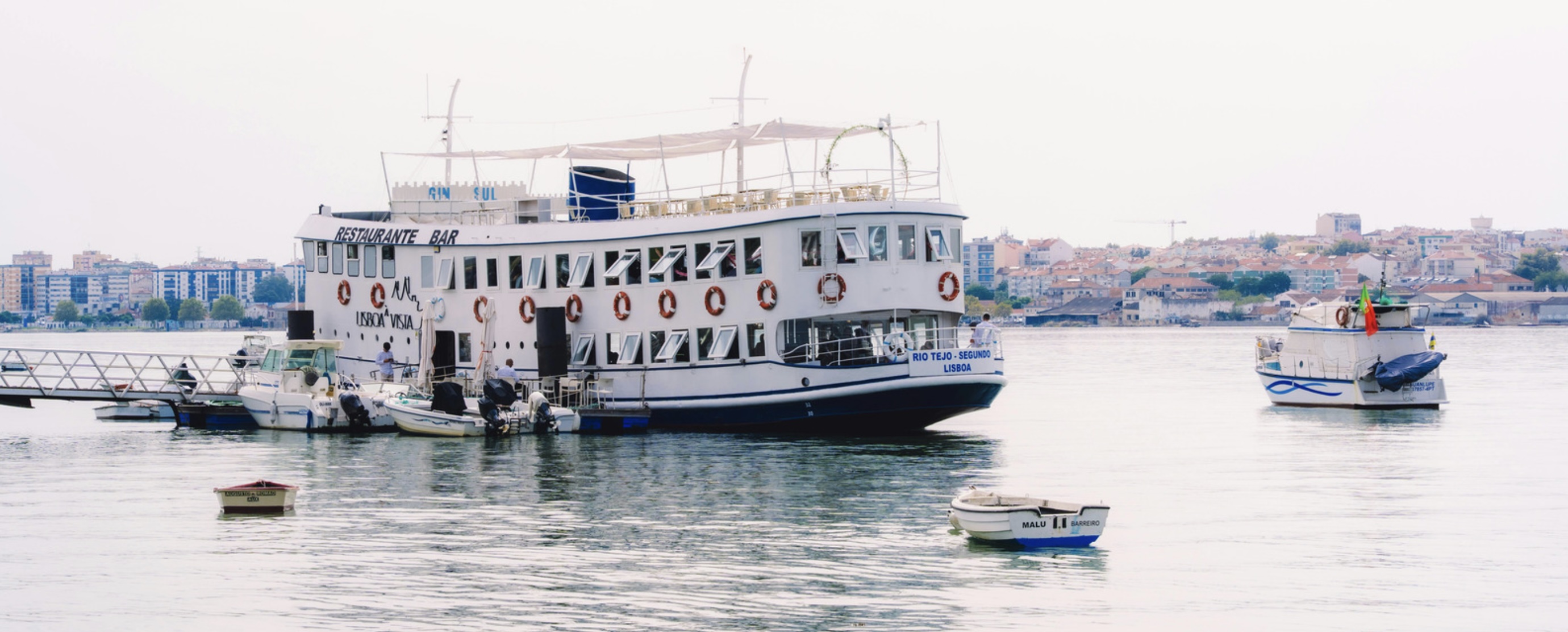
In Barreiro, you’ll find this historic boat, transformed into a waterfront restaurant.
Choose neighborhoods with shade, food and actual life
In summer, choose Lisbon neighborhoods by how well they allow you to spend time there. Give preference to places where you can walk a little, sit down, eat well, find shade and still feel that something is happening around you.
Alvalade is a good example, having been planned in the 20th century as a residential neighborhood, with broad avenues, local commerce, particularly along Avenida da Igreja, schools, cafés, gardens and one of the most popular food markets in Lisbon amongst locals, Mercado de Alvalade (Av. Rio de Janeiro). This makes it very different from those in the historic center, such as the Time Out Market (Av. 24 de Julho), still giving a glimpse of how locals actually buy food, particularly fresh produce and seafood. The pleasure of exploring a neighborhood such as Alvalade is not to chase any particular landmark, but to wander its streets noticing what Lisbon is like during regular daily life. Go there for the old-school pastry shops (pastelarias), neighborhood restaurants, and the kind of cafés where people read the newspaper, complain about football, discuss what was on the news the previous night, and sit long after their drink or food is over.

Imperial de Campo de Ourique open kitchen. Photo: Sílvia Olivença
Campo de Ourique is another residential neighborhood, great to wander during summer as it is relatively flat, and because it has plenty of shops, cafés, bakeries, restaurants and market life, feeling like a destination within Lisbon, even if it doesn’t have any specific major monuments. It is a good neighborhood for a slower lunch, perhaps at a genuine local place such as Imperial de Campo de Ourique (Rua Correia Teles 67), a drink before dinner, or a break from the downtown areas. Nearby, you will find one of Lisbon’s best public gardens, Jardim da Estrela (Praça da Estrela), where during the summer you can enjoy the shade and grab a simple bite or a drink at the several kiosks that are inside.
Alcântara and Junqueira are good choices, particularly towards the end of the day, and if you want to move closer to the river without staying in the most obvious areas. This part of Lisbon is home to old industrial buildings, museums, restaurants, cafés, creative spaces, and access to the riverfront, but in a way that is less crowded than the stretch between Cais das Colunas and Ribeira das Naus downtown, while still being picturesque. For indoor pauses, you have the Museu do Oriente (Av. Brasília 352), which is a good indoor stop if you are interested in Portugal’s historical and cultural connections with Asia. MACAM (Rua da Junqueira 66) brings contemporary art into a restored palace, which makes it a very different kind of museum experience from the larger institutions in Belém. The Cordoaria Nacional (Av. da Índia), a former rope-making factory, is worth checking when there are temporary exhibitions or cultural events. LX Factory (Rua Rodrigues de Faria 103) is better known and way busier, but it can still be enjoyable in this area because it includes cafés, restaurants, shops and bookshops inside an old industrial complex. If you like craft beer and end up visiting the neighborhood of Alcântara, head to Quimera Brewpub (Rua Prior do Crato 6), set inside the tunnel of an 18th century palace, where they often also organize live music evenings.

Lisbon bookshops are places where we can stay for hours
Anjos, Arroios and Intendente offer another version of our city, which is more multicultural and with a stronger urban vibe. These are good areas for people who want food and daily life beyond the usual Portuguese clichés. You can find old tascas, South Asian groceries, Cape Verdean restaurants, Chinese shops, Brazilian snacks, Turkish kebabs, vegan cafés, bars, cultural associations and small restaurants that clearly showcase the world city Lisbon has become, way beyond the usual old Portuguese clichés some less informed tourists may still expect to dominate our city. Still in Arroios, Jardins do Bombarda (Rua Gomes Freire 161), set in part of the former Miguel Bombarda psychiatric hospital, is now a cultural and community space with gardens, food projects, markets, workshops, concerts and other events depending on the day. It is especially good in summer because it has plenty of shade, neighborhood life and (multi)cultural programming.
Carnide and Benfica, two neighborhoods most first-time visitors don’t usually even think about, can take you even further away from the center and deeper into a very local Lisbon. In Carnide, the historic center around Largo do Coreto is a good place to start, with old streets, local restaurants and cafés with the usual Portuguese sweet treats and simple orders of coffee, which means meia de leite or galão over cappuccino, when you feel like a milky coffee. Adega das Gravatas (Tv. do Pregoeiro 15) is a good example of the kind of neighborhood Portuguese cooking you come here for. In Benfica, Mercado de Benfica (Rua João Frederico Ludovice 354) gives you a proper neighborhood market with decades of history, but also a good look at the multicultural pantry of today’s Lisbon. Alongside the usual fish, meat, fruit and vegetables, here you can find ingredients connected to African and Brazilian cooking, a reminder that local food culture in Lisbon has long been shaped by former colonial ties and migration. Nearby, Califa (Estr. de Benfica 463) and Fim de Século (Rua João Frederico Ludovice 28) are two Benfica pastelarias known among locals as “institutions” for pastéis de nata, so, if you have already visited famous places downtown like Manteigaria (several shops across the city) or Nat’elier (Rua de Santa Justa 87), these would be great additions to your sweet itinerary. Of course, visiting neighborhoods such as these requires more intention as, depending on where you are staying, these are parts of town you won’t usually just stumble upon but, with greater effort comes greater reward!
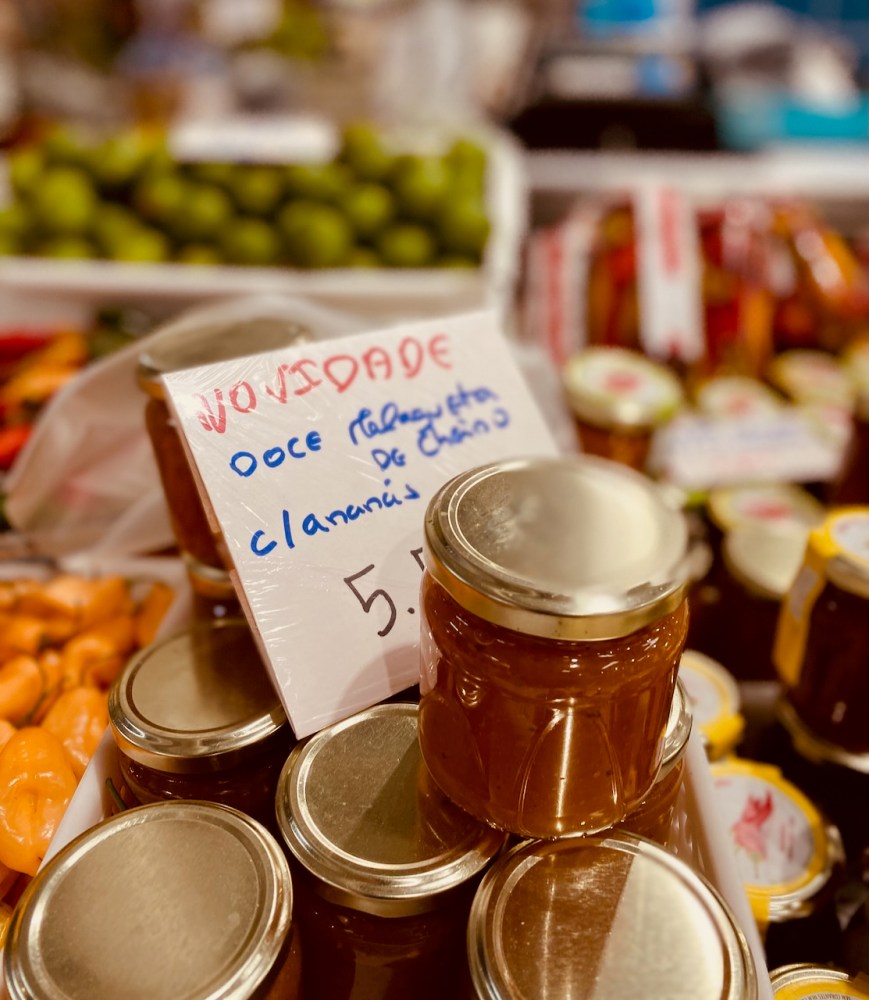
Wander around Lisbon’s best food markets. Photo: Sílvia Olivença
If what you crave is more green space than cafés or culture, Lisbon also has several parks that rarely get the same attention as the viewpoints and downtown gardens. Monsanto Forest Park is the obvious giant, with around 900 hectares of woodland, walking and cycling paths, viewpoints and enough space to feel like you have properly left the city without leaving Lisbon. In Lumiar, Quinta das Conchas e dos Lilases is one of the best options for a slower summer afternoon, with large lawns, shaded areas, walking paths and a more residential feel than the gardens in the historic center. Parque da Bela Vista offers another option for wide open lawns and big skies rather than petite prettiness, but this one is better towards the end of the day, as not all of it is in the shade. Back in Alvalade, Parque José Gomes Ferreira, better known as Mata de Alvalade, is good for a simple walk under trees and will allow you to explore the neighborhood beyond its market and cafés. Around São Domingos de Benfica, Parque Bensaúde has a more enclosed, old-world feeling, with a neoclassical garden, while Tapada das Necessidades, near Alcântara/Prazeres, is another good option if you like green spaces with a slightly historic and imperfect character.

Eat and drink like it’s actually summer
Portuguese food has many famous dishes, but summer may not be the best time to best enjoy some of our national classics. Heavy cod recipes, bean stews, oven dishes and boiled meat stew (cozido à portuguesa) may be delicious in the right context, but they rarely match the mood of a hot Lisbon afternoon. During the warmer months, it makes more sense to eat according to the season, which is how it was traditionally done around here.
A lot of Portuguese summer cooking is built around freshness, fire and very little fuss. One of the best simple meals you can enjoy during summer is grilled fish. Popular options include sea bass, sea bream, sardines, mackerel, horse mackerel or cuttlefish, usually prepared over charcoal for a special smoky taste, and served with simple sides such as boiled potatoes, salad, and perhaps grilled peppers, especially if your order is grilled sardines, all dressed simply but beautifully with olive oil and a touch of vinegar. This isn’t about elaborate cooking, but about food that hits the spot when the weather is hot, allowing the quality of ingredients to shine through.
When it comes to eating grilled fish during summer in Portugal, and particularly around Lisbon, sardines deserve their own mention because they are tied to Lisbon’s Popular Saints festivities in June, when people love eating grilled sardines atop thick slices of rustic bread, which soaks up the juices and fish fat and ends up tasting delicious, and which somehow taste even better eaten while standing in one of the city’s older neighborhoods, listening to loud popular music. This is one of the great seasonal rituals of our city, but it’s good to know that sardines go beyond the month of June. In fact, many of us prefer them later in the season, when they are fattier and thus the flesh stays juicier after hitting the grill.

Chef Pedro Almeida, during on of our Setúbal Day trips, presenting us a maturated tuna ‘pica-pau’ full of flavor and texture. One of our favorite dishes! Photo: Sílvia Olivença
Seafood is part of the Portuguese table all year round, but in summer it becomes even more tempting, especially when eaten close to the river or the coast, with more time to spare. You can order a mixed seafood platter (mariscada) for a little bit of everything, or go à la carte if you know what you like or if you are curious to try something specific for the first time. Some of the great Portuguese seafood classics include clams Bulhão Pato style (amêijoas à Bulhão Pato), cooked with garlic, olive oil, coriander and white wine or lemon juice; garlic prawns (camarão à guilho); octopus salad (salada de polvo); stuffed brown crab (sapateira recheada); and, for the more adventurous, goose barnacles (percebes) and other rarer seafood specialties from Madeira such as limpets (lapas) and barnacles (cracas) from the Azores.
If you are into fish and seafood, we would even recommend leaving Lisbon for a day trip. Setúbal, just south of the capital by the Sado estuary and the Arrábida Natural Park, is one of the best nearby places to understand how Portuguese cooking is shaped by the sea, fishing communities and working markets. Its Mercado do Livramento is a destination in itself, especially for fish and seafood, but also for local products such as Azeitão cheese, bread, olive oil, seasonal fruit and regional wines. Oh! My Cod’s Setúbal food tour follows this relationship between land, sea and tradition through the market, the fish port, local tastings, Portuguese wines and a lunch inspired by fish preservation, ancient garum and the flavors of the region.
For seafood lovers, the Sado Estuary, a protected wetland south of Lisbon, can also be a special detour from the city. This area where river, salt marshes, mudflats, fishing communities and Atlantic influence meet, was once famous for its oysters. Today, that heritage is being revived by a small number of producers, including Célia Rodrigues of Neptune Pearl, with whom we are currently working on a private oyster experience. This is not yet open for regular bookings, but travelers who are genuinely curious can contact us to know more. This seasonal and intimate experience is not something most visitors to Portugal will ever get to do, getting so close to the oyster landscape. Should you wish to, you can literally put on the proper gear, step into the water, and help collect the oysters you’ll get to sample. If you don’t fancy collecting the oysters yourself, there’s no doubt that this is still one of the most original ways to take a dip and refresh yourself near Lisbon!
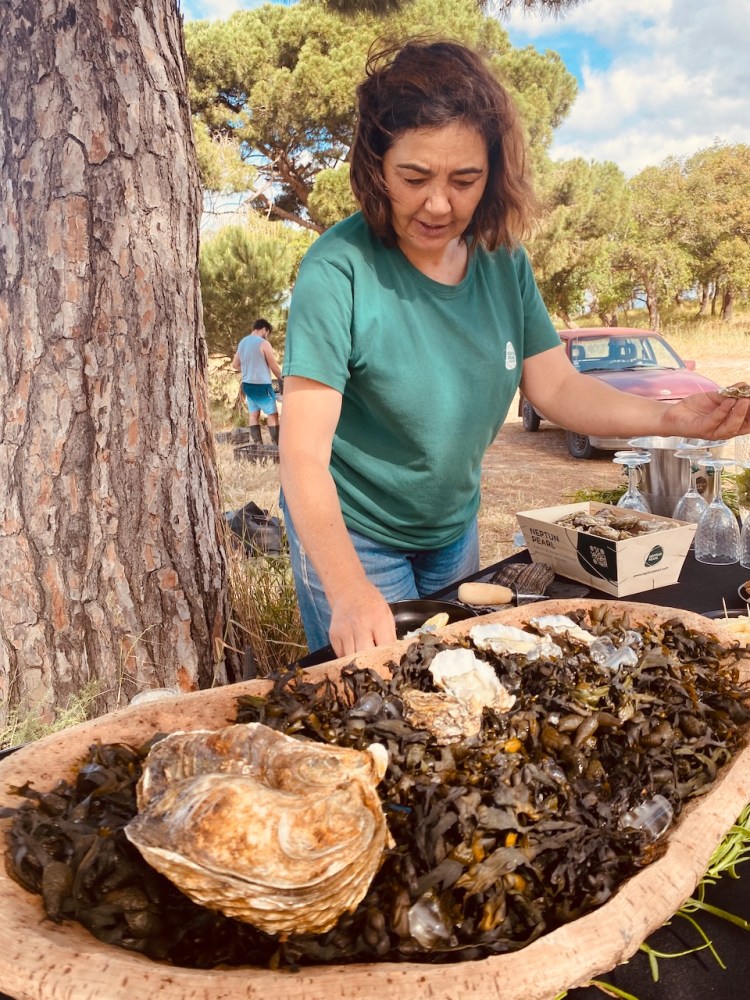
Célia during an experience where we learn (as taste!) about her work recovering this almost extinct Portuguese specie.
Back in Lisbon, summer eating is also about the small habits you see taking place at neighborhood cafés and tascas, such as leisurely sipping on a cold beer and munching on salty snacks. Snails (caracóis) with cold beer are one of the clearest signs that summer has arrived, especially in simple neighborhood establishments where a handwritten or printed sign often appears outside as soon as the season starts. They are usually cooked with oregano, garlic, bay leaf and sometimes a little piri-piri, and, just like lupin beans (tremoços) or olives (azeitonas), they are not considered a meal but a mid-afternoon snack or a pre-dinner bite.
On days when the heat may affect your hunger levels, you’ll be glad to know that Portuguese cuisine has plenty of cold and room-temperature dishes, and some of them are smaller petiscos so that you can order a variety of options and hopefully share them with good company as you experience more of our local food culture. Think about a table with delectable things such as octopus salad, fish roe salad (salada de ovas) or the naturally vegetarian Algarve-style dressed carrots (cenouras à algarvia). Salt cod also works beautifully in summer when it is served cold, especially in shredded cod and chickpea salad (salada de grão com bacalhau). Sometimes, it can be as simple as opening a simple but flavorful can of fish, served with good bread to soak up the juices, or sampling some slices of cured tuna (muxama de atum) either on their own or atop a refreshing mix of greens. Summer is also tomato season so, besides eating them perfectly ripe on a salad, with olive oil and a sprinkle of fleur de sel, they can also be sampled as part of Alentejo-style gaspacho, not to be confused with Spanish gazpacho, as the Portuguese version of this cold soup features the ingredients diced rather than blended.
Seasonal fruit also has a lot to do with the Portuguese summer table. Wander around Lisbon’s best food markets, and you’ll come across things such as melons, watermelons, peaches, nectarines, plums, figs and cherries from popular regions such as Fundão. In traditional restaurants and tascas, dessert may be as simple as a plate of your choice of fruit, peeled and sliced. At home, this is the time to experiment mixing some fruit into savory dishes, such as figs and goat cheese salad, slices of melon with the salty contrast of slices of cured ham, or watermelon blended with tomato for a more contemporary version of a gazpacho-inspired cold soup.
Portugal has incredible wine, but you may not feel like sampling all of it on a hot day. If you are not in the mood for a glass of red wine, you could try a lighter vinho verde which, despite literally translating as green wine, may actually be white, rosé or red. Many restaurants will also serve house wine by the jug (jarro), usually carrying at least one white. If chilled beverages are what you are craving, especially before or after a meal, never mind the specialities you could order in most corners of the world, and ask for a Port tonic, which is similar to a gin tonic but featuring white Port wine instead, a chilled Moscatel de Setúbal, or an almond liqueur (amêndoa amarga) with ice and lemon.

One of the best and most comprehensive views of Lisbon you’ll get to see is at the bottom of the Sanctuary of Christ the King, in Almad.
While in Portugal, we’d suggest also exploring special wines from the Atlantic, especially the volcanic wines from Pico island in the Azores. They are usually more mineral, saline and unusual than the easy summer wines most visitors already know, and they carry a very specific story as vines grow close to the sea, protected by black basalt stone walls, in one of Portugal’s most extraordinary wine landscapes. You will not find Pico wines in every old-school eatery, but better wine bars and more thoughtful Portuguese restaurants in Lisbon increasingly include Azorean bottles, and they are worth asking about if you want to taste a very different side of Portuguese wine.
It is also worth noting that tap water is safe to drink in Lisbon and there are public fountains around the city which you can use to refill your bottle. If you enjoy sparkling water (água com gás), we would recommend naturally fizzy water from local brands such as Pedras, either plain or with fruit flavors. It’s a very Portuguese habit to order one of these waters with your espresso, as it helps clean the palate. And, speaking of coffee, if you are coming from a country where cold coffees are common, your expectations may need a little adjusting while traveling in Portugal. Traditional Portuguese cafés are excellent for espresso (bica) or milky coffee (galão or meia de leite), but they are not always prepared for the kind of iced coffee visitors may know from North America or northern Europe. Some newer cafés do it well but, in traditional pastry shops, asking for an iced coffee may result in being served a regular hot espresso and a glass with ice on the side, for you to do your own mixing. If you are craving something actually cold which you can keep on sipping, you may be better off with fresh orange juice, lemonade or an iced tea, the latter usually from a can, not homemade.
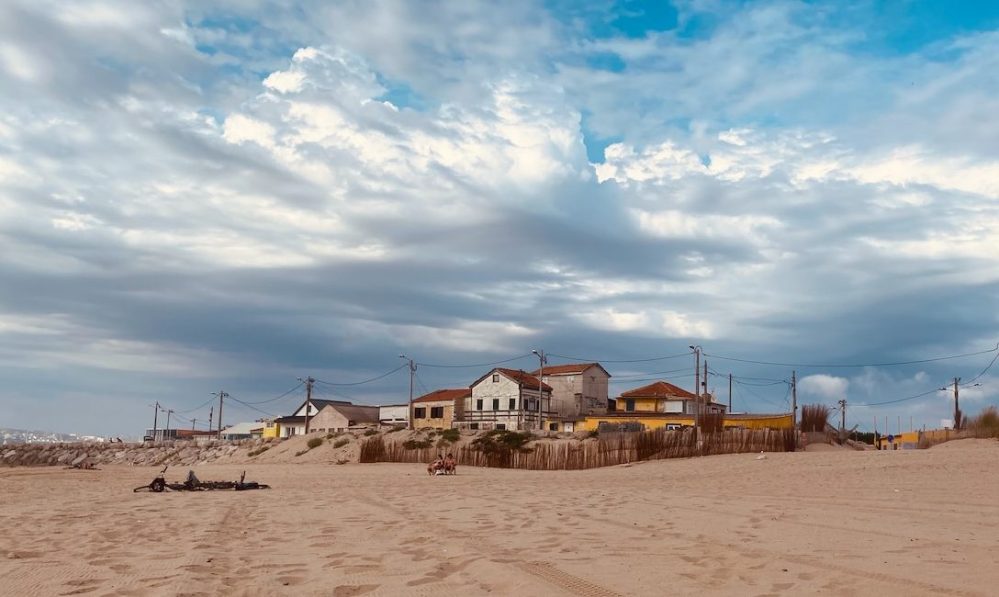
Cova do Vapor beach. Photo: Sílvia Olivença
Swap the obvious viewpoints for places with better summer atmosphere
Lisbon has plenty of viewpoints, and most of them are famous for good reason. During summer, though, popular places such as Portas do Sol (Largo Portas do Sol), Santa Luzia (Largo de Santa Luzia), Senhora do Monte (Largo Monte) or São Pedro de Alcântara (Rua de São Pedro de Alcântara) can become less pleasant than expected, especially in the middle of the day when the heat is intense. Interestingly, though, in old neighborhoods such as Alfama, the narrow winding streets and closely built houses create pockets of shade and cooler air, which explains why walking inside the neighborhood can often feel more comfortable than standing exposed at one of its viewpoints.
We wouldn’t say to skip these miradouros as they are indeed stunning, but try to go early in the morning or later in the evening, when the city is cooler and the atmosphere is less intense. The same view feels very different when you are not standing under direct sun or negotiating space with everyone else who had the same plan.
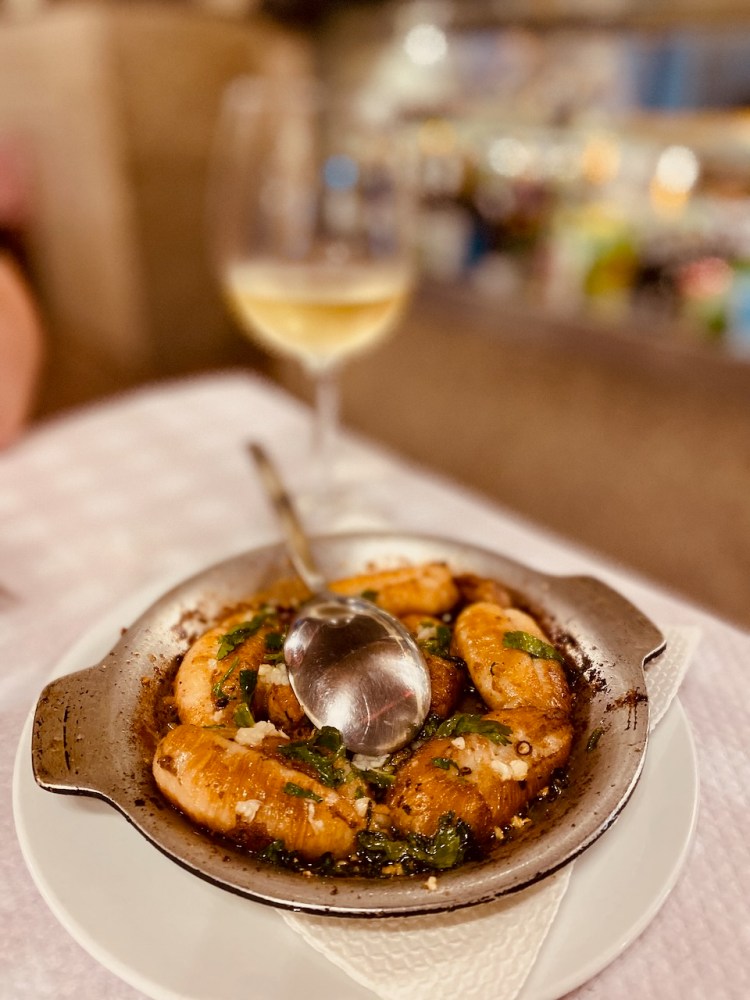
The superb cuttlefish roe in Trafaria during our day trip. Photo: Sílvia Olivença
If you are chasing great views of the city and good photo opportunities, the river often gives you a better version of Lisbon during the warmer months, where you can enjoy the breeze and more space. Places such as Santos, Alcântara and Belém are good starting points, especially towards the end of the day, but you can also go east to the newer Parque Ribeirinho Oriente or further along to Parque das Nações, where the city opens up in a very different and more contemporary way. Some stretches are busier than others, but walking by the river usually feels less compressed than standing at a packed viewpoint in the historic center.
The river itself can also become part of the plan, not just the background. The ferry from Cais do Sodré to Cacilhas is one of the easiest ways to change the mood of the day without organizing a complicated trip. In about ten minutes taking a regular commuter’s boat, you can arrive on the south bank, where you can walk along the riverfront towards Ginjal, drink something cold while looking back at Lisbon, or stay closer to Cacilhas for a more traditional seafood meal at places such as Farol or Cova Funda. If you continue towards Ginjal, restaurants such as Ponto Final and Atira-te ao Rio are some of the coolest places to eat by the water in and around Lisbon, but these places are far from being hidden addresses, so booking ahead is a good idea.
Almada is also a good end-of-day option if you want one of the best views of Lisbon without squeezing into a central viewpoint. In fact, we think that one of the best and most comprehensive views of Lisbon you’ll get to see is precisely from around here, either at the bottom of the Sanctuary of Christ the King, simply sitting in the grass in the little waterfront park just below the Boca do Vento Panoramic Elevator, or from Casa da Cerca, a contemporary art center set in an old estate with gardens and a privileged view over Lisbon and the Tagus.
We love Lisbon views from above just like everybody else does but, especially during summer, it’s important to focus on atmosphere as much as scenery, because a good view should also give you space to breathe, sit, walk, drink something cold or move on without feeling trapped in a crowd.
During summer, move around Lisbon using public transportation
During summer, it is worth saving your energy for the parts of the city where walking really pays off, such as wandering through a neighborhood of your choice, browsing local shops, getting lost in smaller streets, or taking your time after lunch. Spending that same energy climbing exposed hills just to move from one area to another is not always the best use of your body temperature.
Tram 28 is the most obvious example, as it’s charming, historic and very photogenic, but during peak summer it can also mean long queues under the sun and a packed ride through streets you might enjoy more calmly at another time of day. If riding it is important to you, try very early, later in the evening, or consider doing the route in the opposite direction, starting from Campo de Ourique instead of joining the long queue at Martim Moniz. Otherwise, admire it from the outside, take the photo, and use more practical transport when you actually need to move.
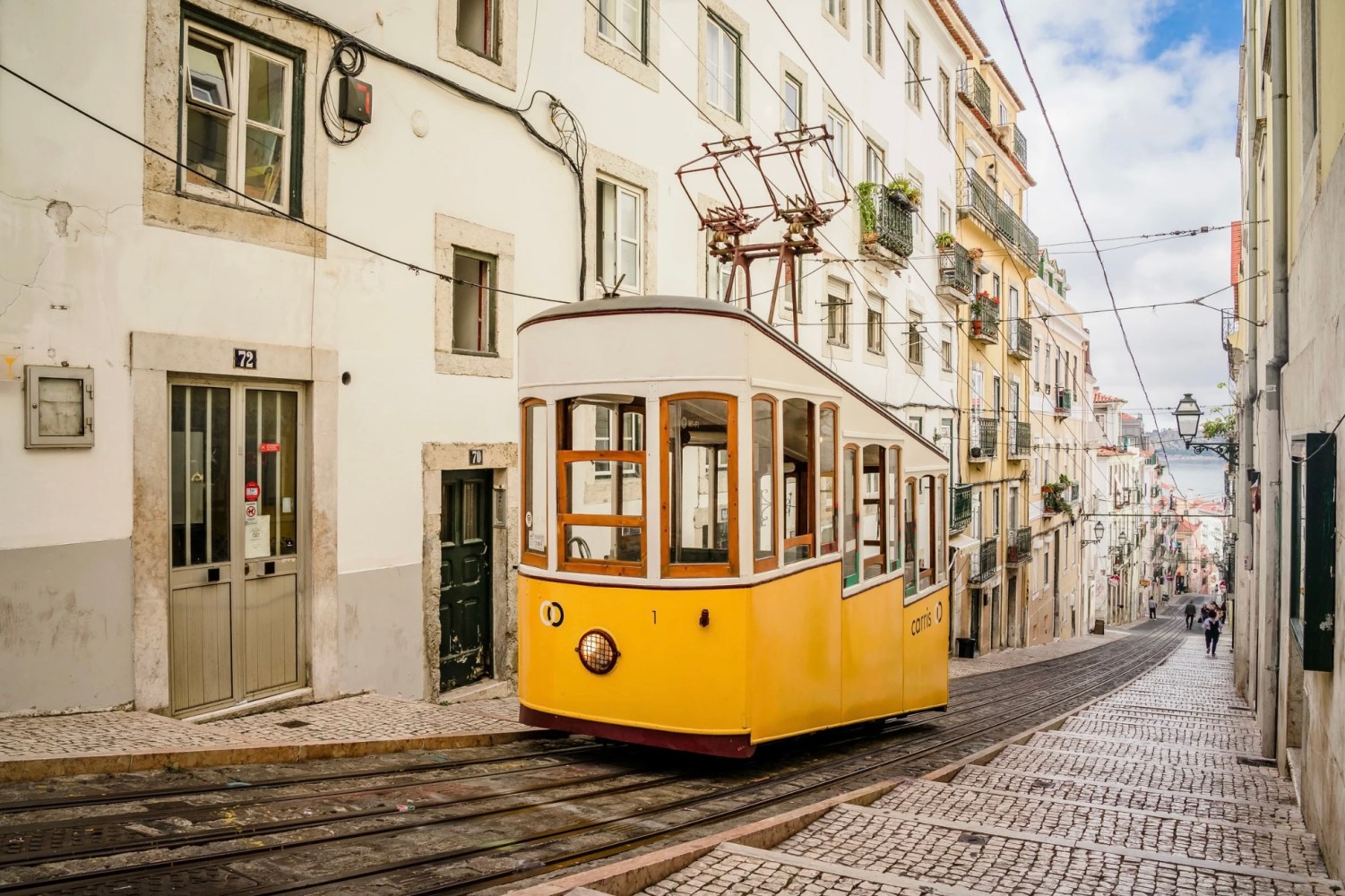
Make use of Lisbon’s public elevators and lifts but Lisbon historic funiculars are also a charming way to escape the city’s steep hills and summer heat.
The metro is often the easiest way to cover longer distances while escaping the heat. It is especially useful for areas such as Alvalade, Benfica, Carnide, Lumiar, Arroios, Saldanha, São Sebastião, Baixa-Chiado or Cais do Sodré. Buses and regular trams can also be useful, particularly when going uphill or connecting areas that the metro does not cover directly, but always check the route before assuming that walking will be faster.
It is also worth making use of Lisbon’s public elevators and lifts. The famous Santa Justa Lift gets most of the attention, but now-a-days it’s used just as a paid viewpoint. We’re talking about free public elevators for anyone to use. While in Baixa, you could save yourself a strenuous climb to the São Jorge Castle by taking Elevador da Baixa at Rua dos Fanqueiros up to Rua da Madalena and Largo Adelino Amaro da Costa, then hop on Elevador do Castelo inside the Chão do Loureiro building (which includes a Pingo Doce supermarket and a parking lot), continuing towards Costa do Castelo. Around Alfama, the Elevador de Santa Luzia also helps with the slope between Rua Norberto Araújo and the Miradouro de Santa Luzia, and the Elevador da Sé connects the Campo das Cebolas area, behind Casa dos Bicos, with the streets around the cathedral. These are small pieces of the city’s infrastructure many of us locals are grateful to have on hot summer days, and they are rarely mentioned in travel guides.
Ferries should also be on your radar when traveling around Lisbon, as they are indeed regular public transportation, not tourist cruises, and they give you some of the best views of the city while taking you somewhere that actually changes the mood of the day. Cais do Sodré to Cacilhas, Belém to Trafaria, and Terreiro do Paço to Barreiro are all useful crossings, depending on where you want to go.
For tickets, the simplest option for most visitors is often to load a Navegante occasional card with zapping credit, which can be used across metro, buses, trams, trains and ferries. It gives you more flexibility than buying single tickets every time, not to mention that trips work out much cheaper this way, and it makes it easier to change plans during the day.
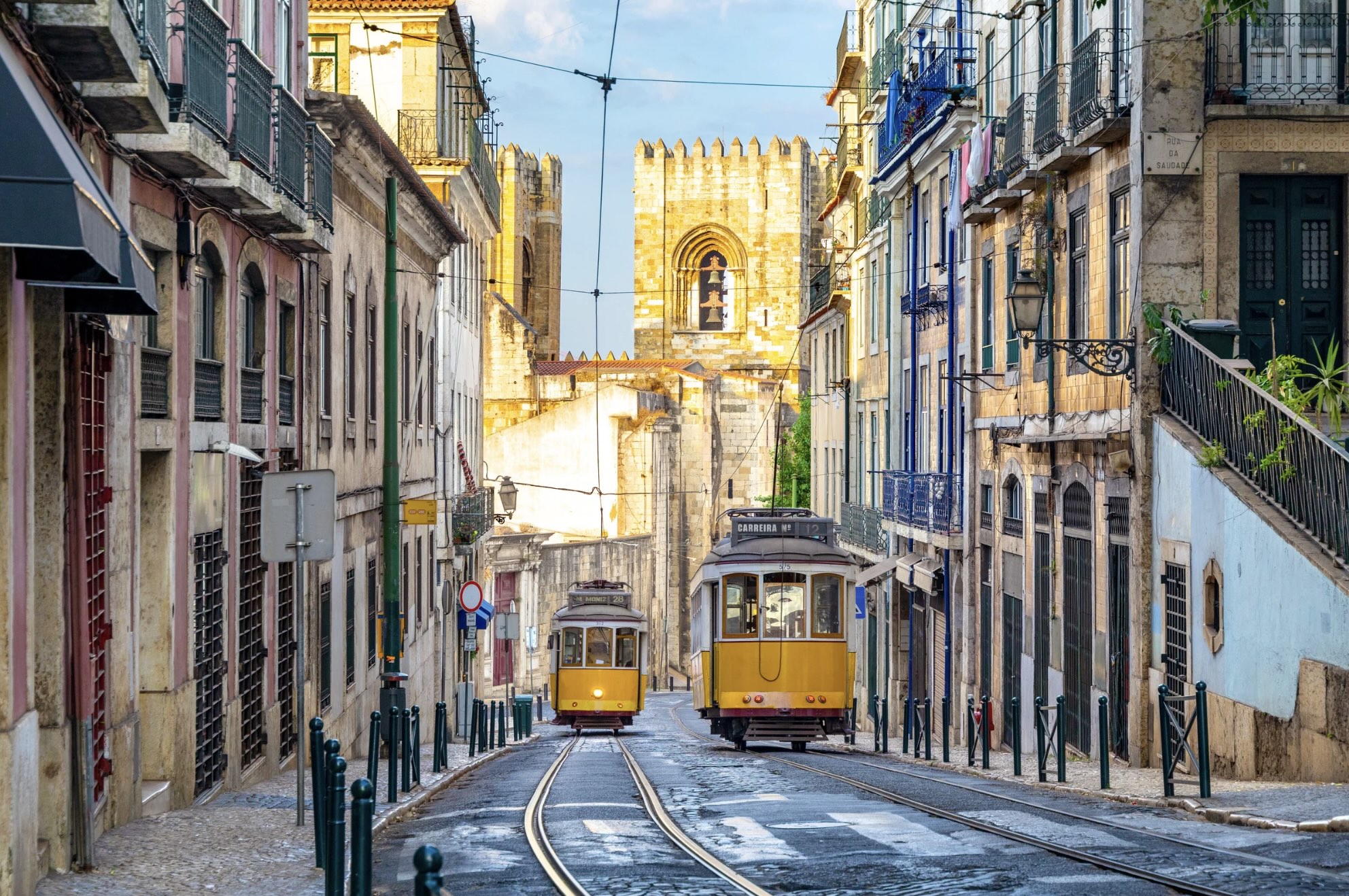
A picture that become so iconic of Lisbon, but also the street where Silvia, Oh! My Cod founder, grew up. And of course the 28 train, she used to take daily to school and later to meet friends, wonder and explore the city.
Quick practical do’s and don’ts for Lisbon in summer
A few quick rules make summer in Lisbon much easier:
- Do start early if you want to walk through hilly neighborhoods such as Alfama, Graça, Mouraria or Bairro Alto before the heat and crowds settle in.
- Do leave room for a proper lunch, especially in a neighborhood restaurant away from the busiest tourist streets, as it gives structure and shade to the hottest part of the day. If you’re not sure where to go, we have good recommendations on the best old and new taverns of Lisbon.
- Do check opening hours directly before crossing town for a specific restaurant, café or cultural space, especially in August, when Google is not always up to date.
- Do book ahead for popular restaurants, riverside places, rooftop bars, food tours, cultural events and anything with limited capacity.
- Do refill your water bottle, as tap water is safe to drink in Lisbon and public fountains can be found around the city.
- Do use transport for the boring stretches, saving your walking energy for markets, gardens, riverfronts, residential streets and old neighborhoods where wandering is actually part of the pleasure.
- Do eat according to season: grilled fish, seafood, cold dishes, ripe fruit, cold beer and lighter wines such as vinho verde.
- Do look beyond the obvious center, going to neighborhoods such as Alvalade, Campo de Ourique, Arroios, Alcântara, Carnide, Benfica, or the south bank.
- Don’t underestimate Lisbon’s hills in direct sun, as a short walk on the map can feel very different when it involves stairs, cobblestones, no shade and high temperatures.
- Don’t queue for every famous food item, because good pastéis de nata, bifanas, fresh seafood and other popular Portuguese foods exist in more than one place.
- Don’t assume the closest beach is the best beach, especially on weekends and in August, when the easiest train stops can also be the busiest. We have an entire article dedicated to the best alternative beaches near Lisbon, and where to eat and drink nearby.
- Don’t romanticize Tram 28, as it is charming but often also hot, packed and you may have to queue for quite some time during peak summer.
- Don’t book every meal in the most obvious tourist areas, as lunch and dinner are good excuses to explore neighborhoods beyond the historic center.
- Don’t mistake crowds for authenticity, because a long line full of foreigners doesn’t necessarily say a lot about local eating habits.
- Don’t feel guilty for doing less, as one neighborhood, one good meal, one garden, one cultural stop and one cold drink at the right hour can give you a better Lisbon day than a completed checklist.
Lisbon can be wonderful in summer, as long as you keep some of these recommendations in mind. Follow the shade, eat what the season puts on the table, cross the river when the center starts to feel too tight, and let a good lunch or a cold drink change the plan. If you travel with a curious and relaxed approach, you’ll see that Lisbon also exists and shines beyond the obvious route, and that is exactly the Lisbon we like to share at Oh! My Cod.
Article by :
Zara Quiroga (freelance food writer and food & cultural leader at Oh! My Cod Pico Trips)
Sílvia Olivença (anthropologist and food guide/CEO at Oh! My Cod Ethnographic Food Tours & Trips)
Photos:
Sílvia Olivença (anthropologist and food guide/CEO at Oh! My Cod Ethnographic Food Tours & Trips)
Want to more about Portuguese cuisine and its influences?
Portuguese vinho verde: green wine is much more than sparkling wine
Alternative beaches near Lisbon (and where to eat and drink nearby)
A day trip to Setúbal from Lisbon filled with history, sea culture and incredible cuisine
Lisbon best tavernas: the old and the contemporary tascas
From Lisbon to Cascais: what to see, do and eat along the coastline (include vegetarian/vegan options)